














Alte seltene Karte der nordamerikanischen Indianerstämme, 1844: Quäker-Versammlungen, Ureinwohner Amerikas
In unserer Londoner Werkstatt aus der Originalkarte von 1844 restauriert und in Museumsqualität gedruckt. Vollständige Beschreibung
Das Sammlerangebot
Wählen Sie zwei berechtigte Werke und erhalten Sie auf beide 20 % Rabatt. Wählen Sie drei, und das günstigste ist kostenlos – eine maximale Ersparnis von 33 %.
Kombinieren Sie berechtigte Standardkarten und Kunstdrucke nach Belieben. Kein Code erforderlich; das Angebot wird an der Kasse automatisch angewendet.
Standardmäßige Konfigurationen nach Maßanfertigung sind inbegriffen. Maßgeschneiderte Größen, personalisierte Entwürfe und Auftragsarbeiten sind ausgeschlossen.
Benötigen Sie die Lieferung an unterschiedliche Adressen? Kontaktieren Sie uns vor der Bestellung.Das Sammlerangebot
Wählen Sie zwei berechtigte Werke und erhalten Sie auf beide 20 % Rabatt. Wählen Sie drei, und das günstigste ist kostenlos – eine maximale Ersparnis von 33 %.
Kombinieren Sie berechtigte Standardkarten und Kunstdrucke nach Belieben. Kein Code erforderlich; das Angebot wird an der Kasse automatisch angewendet.
Standardmäßige Konfigurationen nach Maßanfertigung sind inbegriffen. Maßgeschneiderte Größen, personalisierte Entwürfe und Auftragsarbeiten sind ausgeschlossen.
Benötigen Sie die Lieferung an unterschiedliche Adressen? Kontaktieren Sie uns vor der Bestellung. In London restauriert • Gedruckt und gerahmt in Canada

Aus der Originalkarte von 1844 restauriert und in Museumsqualität gedruckt. Vollständige Beschreibung
Größe wählen
Ausführung wählen


(Mehr Infos)
Geschenkmitteilung & individuelle Ausführung

Wenn Sie eine Geschenkmitteilung oder eine Ausführung (Puzzle, Aluminiumplatte usw.) hinzufügen möchten, die hier nicht verfügbar ist, geben Sie dies bitte in der "Bestellnotiz" beim Checkout an.
Jede Bestellung wird individuell angefertigt. Wenn Sie die Größe leicht anpassen oder auf einem ungewöhnlichen Material drucken lassen möchten, lassen Sie es uns einfach wissen. Wir haben im Laufe der Jahre Tausende von individuellen Bestellungen bearbeitet, daher gibt es (fast) nichts, was wir nicht bewältigen können.
Sie können uns auch kontaktieren, bevor Sie bestellen, wenn Sie möchten!
Ein Stück Geschichte für Ihr Zuhause
Über 8.000 5-Sterne-Bewertungen


Eine Karte von Nordamerika, die die Grenzen der Jahresversammlungen der Friends und die Standorte der verschiedenen Indianerstämme verzeichnet, 1844 von James Bowden...
WeiterlesenEine Karte von Nordamerika, die die Grenzen der Jahresversammlungen der Friends und die Standorte der verschiedenen Indianerstämme verzeichnet, 1844 von James Bowden geschaffen und in London vom Aborigines’ Committee der Meeting for Sufferings herausgegeben, verbindet Advocacy mit kartografischer Klarheit. Sie wurde zur Begleitung des Quäker-Bandes Some Account of the Conduct of the Religious Society of Friends…to the Year 1843 vorbereitet und gliedert den Kontinent in klare, farbcodierte Flächen: den territorialen Geltungsbereich der Quäker-Jahresversammlungen, verwoben mit den markierten Standorten der indigenen Nationen. Flüsse, Gebirgsketten und Küstenlinien sind sorgfältig nachgezeichnet, sodass das moralische Argument in der Geografie verankert ist. Das Ergebnis ist nicht bloß eine Referenz, sondern eine sorgfältig argumentierte Karte, die zeigt, wo Gemeinschaften des Gewissens und Gemeinschaften unter Druck auf einem sich rasch wandelnden Nordamerika nebeneinander existierten—und kollidierten—.
Bowden, ein engagierter englischer Friend, entwarf eine Karte, die den praktischen, dokumentarischen Geist der Quäker-Reform widerspiegelt. Die Meeting for Sufferings—der ständige Ausschuss der London Yearly Meeting—beauftragte ihr Aborigines’ Committee damit, Belege zu sammeln und auf das Unrecht aufmerksam zu machen, dem indigene Völker ausgesetzt waren. Bowdens Lösung ist kartografische Synthese: eine „moralische Topografie“, die kirchliche Verwaltung und menschliche Verdrängung überlagert. Die abgestuften Farbtöne, die die Yearly Meetings abgrenzen, sprechen für die quäkerische Organisation und pastorale Reichweite, während die präzise Beschriftung der Stammesgebiete ein ernüchterndes Verzeichnis der Folgen liefert. In London herausgegeben, versetzte das Blatt transatlantische Leser in die Lage, Berichte aus dem Feld—Briefe, Protokolle und Reisejournale—an den harten Tatsachen von überquerten Bergen, durchwateten Flüssen und verschobenen Grenzen zu messen.
Nirgends ist die Beweiskraft der Karte beredter als in ihrer Legende, die die demografischen Narben der Vertreibung aufzählt: nur 26.796 indigene Menschen verblieben östlich des Mississippi, gegenüber 77.447, die nach Westen gedrängt wurden, darunter 15.000 Cherokee. Diese drastische Arithmetik verdichtet ein Jahrzehnt föderaler Politik auf einen einzigen Blick und visualisiert die Folgen erzwungener Märsche und erzwungener Verträge. Östlich des Flusses lichten sich die Namen; westwärts verdichten sie sich entlang des Korridors, der bald als Indian Territory bekannt sein sollte. Indem Bowden die Bevölkerungszahlen als kartografische Ebene behandelt, verwandelt er die Seite in ein Verzeichnis der Verantwortung und macht sichtbar, wie expansionistische Linien auf der Karte eines Vermessers in zerrissene Heimatländer und neu konstituierte Nationen an neuen, oft trockenen Grenzen übersetzt wurden.
Geografisch ist die Karte eine Lektion in der Struktur des Kontinents. Der Mississippi teilt die Seite, gespeist von Ohio und Missouri, während die Appalachen und die Rockies als lange, gepunktete Rücken aufragen und Klima, Siedlung und Handel lenken. Die Großen Seen, der Sankt-Lorenz-Strom und die Golfküste fixieren Handelsrouten, die den Aufstieg klar markierter Städte ermöglichten: Philadelphia und New York, Quäker-Hochburgen und Handelsgiganten; Washington und Richmond, politische Drehpunkte; Charleston, ein wichtiger Atlantikhafen; Cincinnati, Tor zum Ohio Valley; St. Louis, Schlüsselknoten am Zusammenfluss von Mississippi und Missouri; Chicago, das entstehende Gelenk von See und Prärie; und New Orleans, der unübertroffene Endpunkt des Flusses. Im Westen werden weite Räume, die damals als kaum besiedelt beschrieben wurden, einer dicht bevölkerten Ostküste gegenübergestellt und unterstreichen die Geschwindigkeit—und das Ungleichgewicht—des Wachstums im 19. Jahrhundert.
Ebenso charakteristisch ist die kirchliche Geografie der Karte: Grenzen der Jahresversammlungen — Philadelphia, New York, Baltimore, Ohio, Indiana, North Carolina und weitere — sind in kontrastierenden Farbtönen nachgezeichnet. Diese Linien offenbaren ein Geflecht aus Aufsicht, Gottesdienst und Zeugnis und kartieren die Wege, auf denen Geistliche reisten, Ausschüsse korrespondierten und Hilfsmaßnahmen organisiert wurden. In Bowdens Händen werden die jurisdiktionellen Umrisse der Friends zu einer Orientierungshilfe für das Gewissen und rücken Quäkergemeinden in die Nähe der indigenen Nationen, die sie zu unterstützen und zu verteidigen suchten. Die Synthese bleibt als seltene visuelle Aufzeichnung der Mitte des 19. Jahrhunderts erhalten — zugleich Verwaltungsplan, historisches Zeugnis und humanitäres Statement — und erfasst die verflochtenen Geschichten von Glauben, Expansion und Beständigkeit, die in die Flüsse, Ebenen und Städte Nordamerikas eingeschrieben sind.
Städte und Orte auf dieser Karte
- Philadelphia, PA (bevölkerungsreichste Stadt, historisches Quäkerzentrum)
- New York, NY (zweitbevölkerungsreichste Stadt)
- Chicago, IL
- Cincinnati, OH
- New Orleans, LA
- St. Louis, MO
- Charleston, SC
- Richmond, VA
- Washington, D.C.
Bemerkenswerte Merkmale & Wahrzeichen
- Grenzen der Jahresversammlungen: Durch farblich codierte Linien unterschieden, die die verschiedenen regionalen Quäkerversammlungen umreißen.
- Standorte indigener Stämme: Deutlich markiert und mit den Verdrängungen infolge erzwungener Migrationen dargestellt.
- Legende: Quantifiziert die auf der Karte verzeichneten Bevölkerungszahlen und Stammesgruppen.
- Topografie: Enthält detaillierte Geländemerkmale wie Berge und Flüsse und vertieft so das geografische Verständnis.
- Geografische Details: Eine weitere Informationsebene durch markante Wahrzeichen und unerforschte Gebiete.
Historischer und gestalterischer Kontext
- Kartograf/Verleger: 1844 von James Bowden erstellt; in London vom Aborigines’ Committee of the Meeting for Sufferings herausgegeben.
- Zweck: Begleitete den Quäkerband „Some Account of the Conduct of the Religious Society of Friends…to the Year 1843.“
- Historischer Kontext: Spiegelte die weitreichende Verdrängung indigener nordamerikanischer Stämme wider, einschließlich des deutlichen Kontrasts zwischen den Bevölkerungen östlich und westlich des Mississippi.
- Quantifizierung: Die Legende nennt 26.796 nordamerikanische Ureinwohner östlich des Flusses im Vergleich zu 77.447, die nach Westen umgesiedelt wurden, darunter 15.000 Cherokee.
- Gestaltung und Stil: Verwendet farbcodierte Grenzen für verschiedene Jahresversammlungen und Stammesgebiete und erhöht so die visuelle Unterscheidbarkeit.
- Bedeutung: Eine wichtige visuelle Aufzeichnung aus der Mitte des 19. Jahrhunderts, die die Auswirkungen der euro-amerikanischen Expansion und die Bemühungen der Quäker im Kontext sozialer Gerechtigkeit hervorhebt.
Bitte prüfen Sie die Bilder sorgfältig, um sicherzustellen, dass eine bestimmte Stadt oder ein bestimmter Ort auf dieser Karte dargestellt ist. Sie können uns auch gerne kontaktieren und uns bitten, die Karte für Sie zu prüfen.
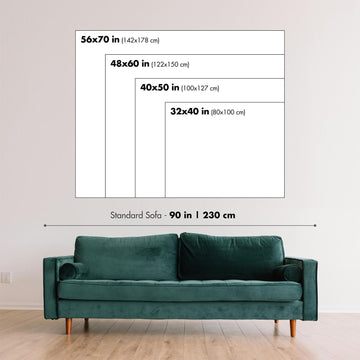
Diese Karte wirkt in jeder Größe hervorragend, doch ich empfehle grundsätzlich eine größere Ausführung, wenn Sie den Platz dafür haben. So können Sie alle Details leichter erkennen.
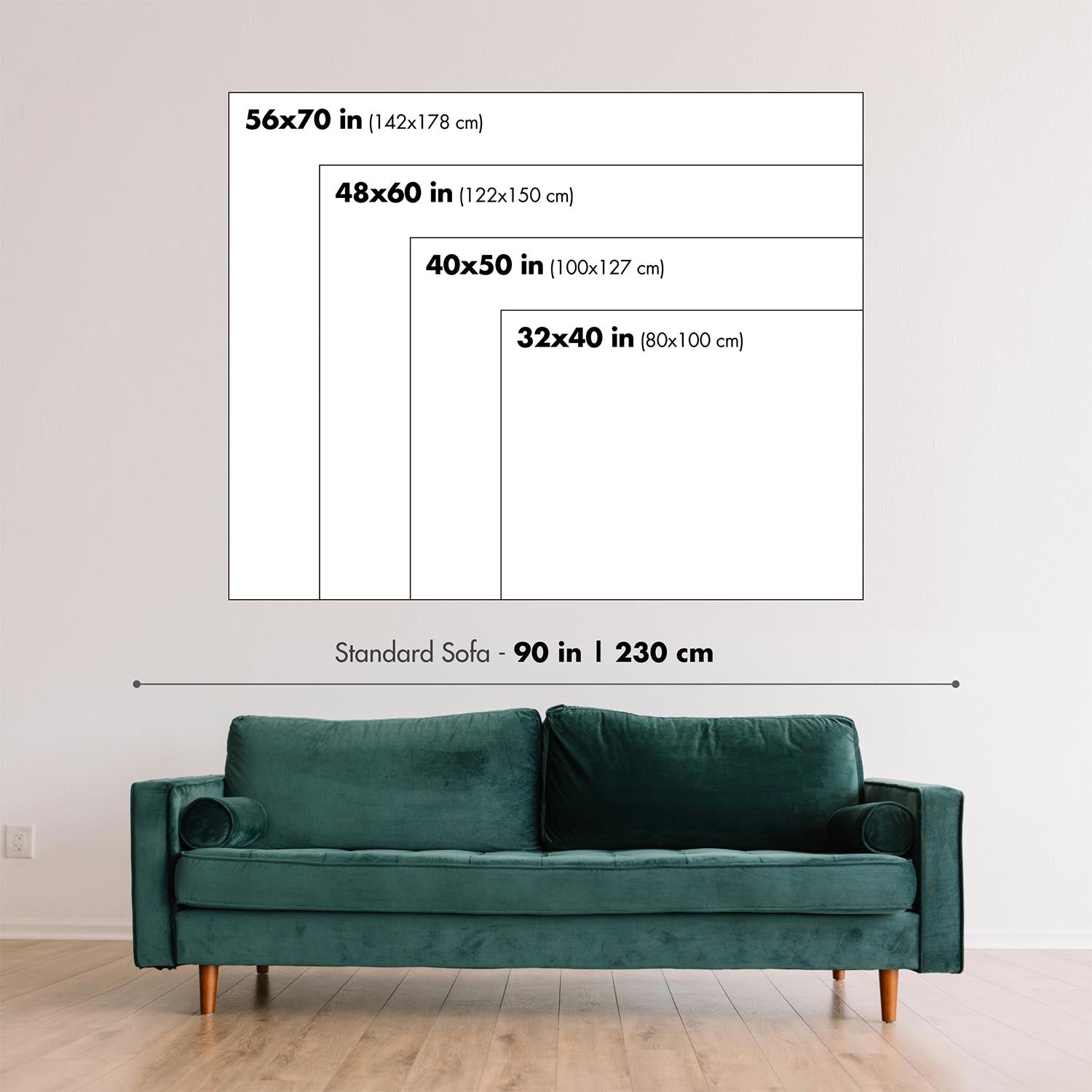
Diese Karte sieht bis zu einer Größe von 50in (125cm) großartig aus. Wenn Sie eine größere Karte suchen, nehmen Sie bitte Kontakt mit uns auf.
Das Model auf den Angebotsbildern hält die Version dieser Karte im Format 16x20in (40x50cm).
Das fünfte Angebotsbild zeigt ein Beispiel meines Personalisierungsservices für Karten.
Wenn Sie etwas leicht anderes suchen, sehen Sie sich meine Sammlung der besten alten Karten an. um zu sehen, ob Ihnen noch etwas anderes ins Auge fällt.
Bitte kontaktieren Sie mich, um zu prüfen, ob ein bestimmter Ort, ein Wahrzeichen oder ein Merkmal auf dieser Karte dargestellt ist.
Dies wäre ein wunderbares Geschenk zum Geburtstag, zu Weihnachten, zum Vatertag, zum Abschied aus dem Beruf, zum Jahrestag oder zum Einzug für jemanden aus den von dieser Karte abgedeckten Regionen.
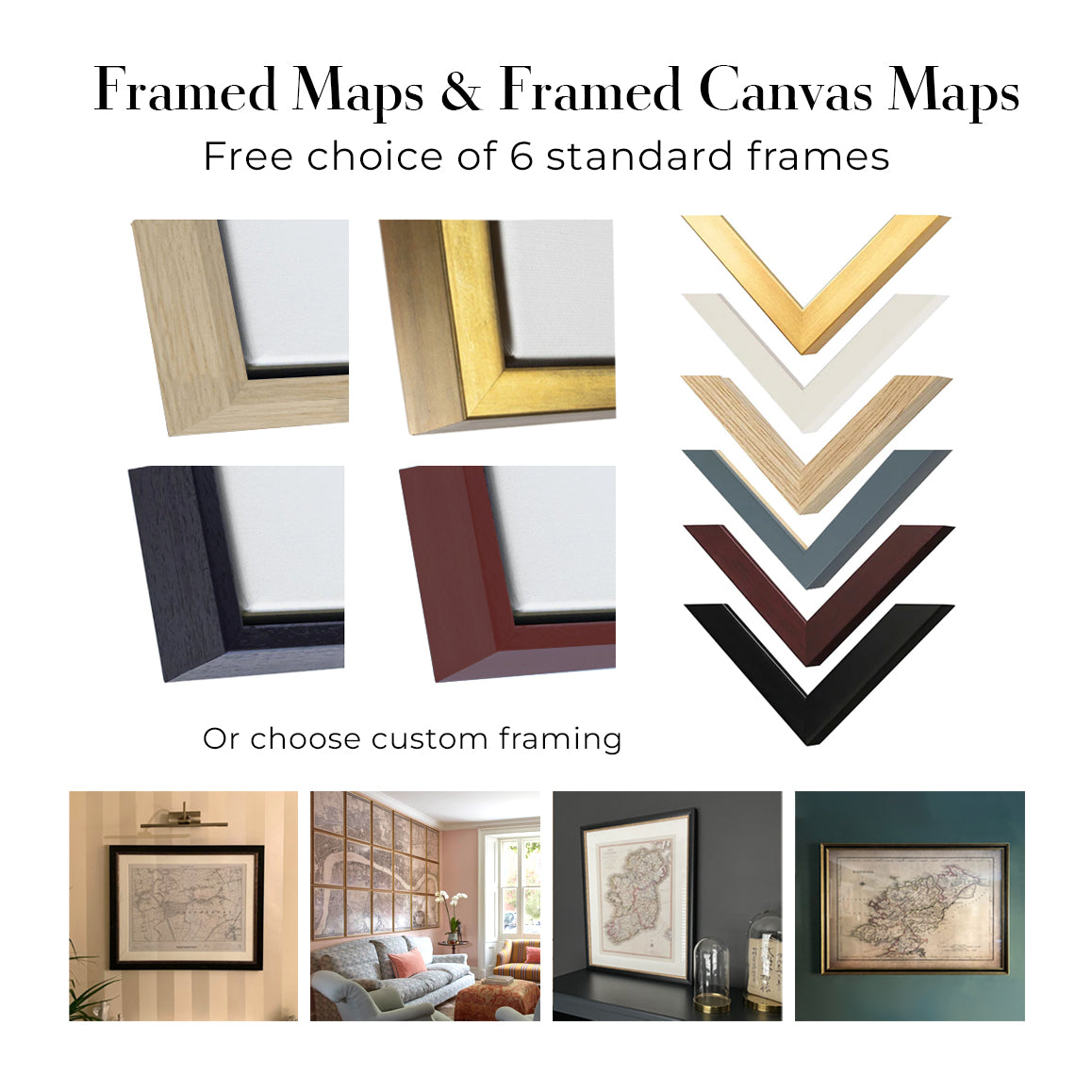
Diese Karte ist als Giclée-Druck auf säurefreiem Archiv-Mattpapier erhältlich, oder Sie können sie gerahmt kaufen. Der Rahmen ist ein schöner, schlichter schwarzer Rahmen, der zu den meisten Stilrichtungen passt. Bitte nehmen Sie Kontakt auf, wenn Sie eine andere Rahmenfarbe oder ein anderes Material wünschen. Meine Rahmen sind mit extraklarem Museum-Acrylglas (Perspex/Acrylite) verglast, das deutlich weniger reflektiert als Glas, sicherer ist und stets in perfektem Zustand bei Ihnen ankommt.
This map is also available as a float framed canvas, sometimes known as a shadow gap framed canvas or canvas floater. The map is printed on artist's cotton canvas and then stretched over a handmade box frame. We then "float" the canvas inside a wooden frame, which is available in a range of colours (black, dark brown, oak, antique gold and white). This is a wonderful way to present a map without glazing in front. See some examples of float framed canvas maps and explore the differences between my different finishes.
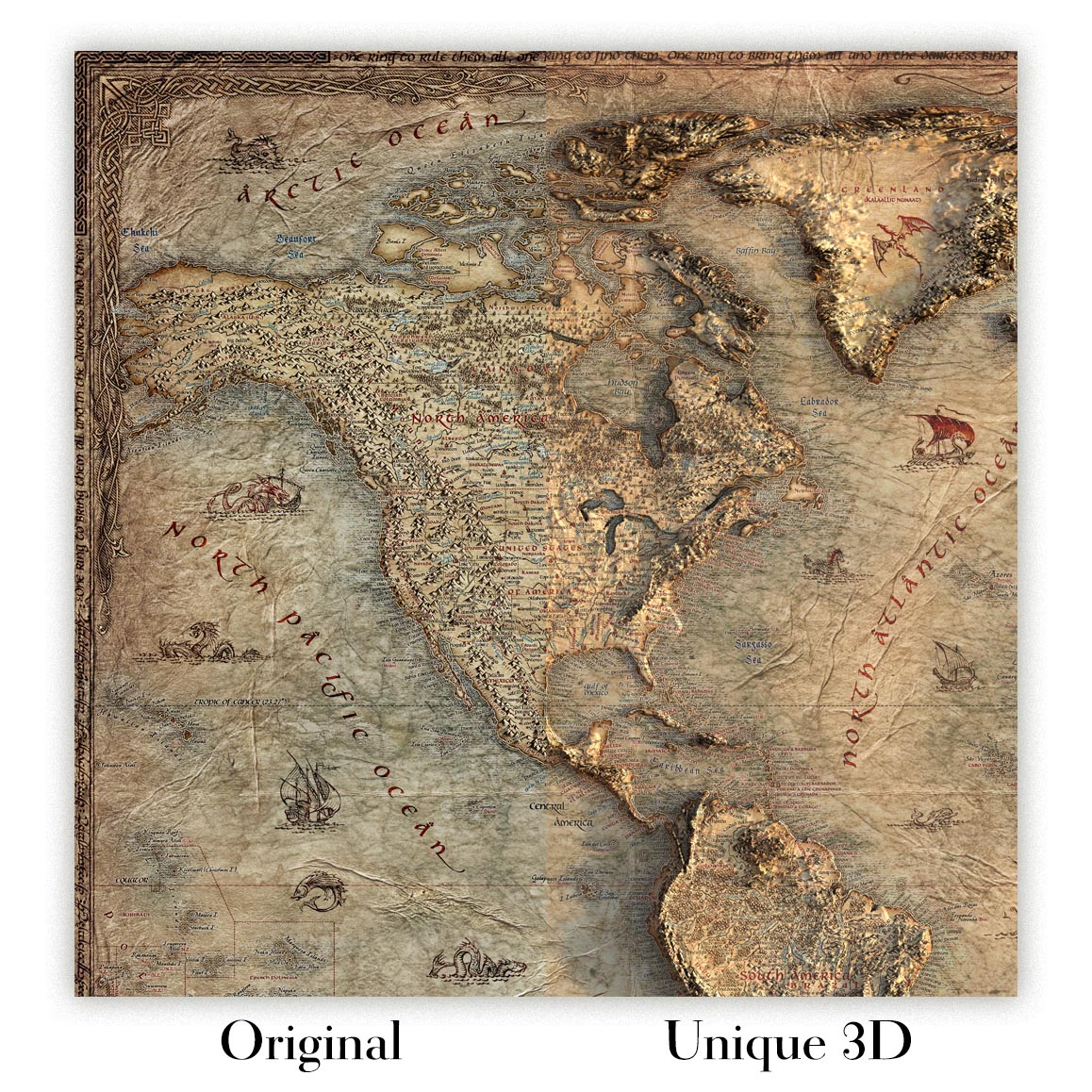
For something truly unique, this map is also available in "Unique 3D", our trademarked process that dramatically transforms the map so that it has a wonderful sense of depth. We combine the original map with detailed topography and elevation data, so that mountains and the terrain really "pop". For more info and examples of 3D maps, check my Unique 3D page.
Eine Karte von Nordamerika, die die Grenzen der Jahresversammlungen der Friends und die Standorte der verschiedenen Indianerstämme verzeichnet, 1844 von James Bowden geschaffen und in London vom Aborigines’ Committee der Meeting for Sufferings herausgegeben, verbindet Advocacy mit kartografischer Klarheit. Sie wurde zur Begleitung des Quäker-Bandes Some Account of the Conduct of the Religious Society of Friends…to the Year 1843 vorbereitet und gliedert den Kontinent in klare, farbcodierte Flächen: den territorialen Geltungsbereich der Quäker-Jahresversammlungen, verwoben mit den markierten Standorten der indigenen Nationen. Flüsse, Gebirgsketten und Küstenlinien sind sorgfältig nachgezeichnet, sodass das moralische Argument in der Geografie verankert ist. Das Ergebnis ist nicht bloß eine Referenz, sondern eine sorgfältig argumentierte Karte, die zeigt, wo Gemeinschaften des Gewissens und Gemeinschaften unter Druck auf einem sich rasch wandelnden Nordamerika nebeneinander existierten—und kollidierten—.
Bowden, ein engagierter englischer Friend, entwarf eine Karte, die den praktischen, dokumentarischen Geist der Quäker-Reform widerspiegelt. Die Meeting for Sufferings—der ständige Ausschuss der London Yearly Meeting—beauftragte ihr Aborigines’ Committee damit, Belege zu sammeln und auf das Unrecht aufmerksam zu machen, dem indigene Völker ausgesetzt waren. Bowdens Lösung ist kartografische Synthese: eine „moralische Topografie“, die kirchliche Verwaltung und menschliche Verdrängung überlagert. Die abgestuften Farbtöne, die die Yearly Meetings abgrenzen, sprechen für die quäkerische Organisation und pastorale Reichweite, während die präzise Beschriftung der Stammesgebiete ein ernüchterndes Verzeichnis der Folgen liefert. In London herausgegeben, versetzte das Blatt transatlantische Leser in die Lage, Berichte aus dem Feld—Briefe, Protokolle und Reisejournale—an den harten Tatsachen von überquerten Bergen, durchwateten Flüssen und verschobenen Grenzen zu messen.
Nirgends ist die Beweiskraft der Karte beredter als in ihrer Legende, die die demografischen Narben der Vertreibung aufzählt: nur 26.796 indigene Menschen verblieben östlich des Mississippi, gegenüber 77.447, die nach Westen gedrängt wurden, darunter 15.000 Cherokee. Diese drastische Arithmetik verdichtet ein Jahrzehnt föderaler Politik auf einen einzigen Blick und visualisiert die Folgen erzwungener Märsche und erzwungener Verträge. Östlich des Flusses lichten sich die Namen; westwärts verdichten sie sich entlang des Korridors, der bald als Indian Territory bekannt sein sollte. Indem Bowden die Bevölkerungszahlen als kartografische Ebene behandelt, verwandelt er die Seite in ein Verzeichnis der Verantwortung und macht sichtbar, wie expansionistische Linien auf der Karte eines Vermessers in zerrissene Heimatländer und neu konstituierte Nationen an neuen, oft trockenen Grenzen übersetzt wurden.
Geografisch ist die Karte eine Lektion in der Struktur des Kontinents. Der Mississippi teilt die Seite, gespeist von Ohio und Missouri, während die Appalachen und die Rockies als lange, gepunktete Rücken aufragen und Klima, Siedlung und Handel lenken. Die Großen Seen, der Sankt-Lorenz-Strom und die Golfküste fixieren Handelsrouten, die den Aufstieg klar markierter Städte ermöglichten: Philadelphia und New York, Quäker-Hochburgen und Handelsgiganten; Washington und Richmond, politische Drehpunkte; Charleston, ein wichtiger Atlantikhafen; Cincinnati, Tor zum Ohio Valley; St. Louis, Schlüsselknoten am Zusammenfluss von Mississippi und Missouri; Chicago, das entstehende Gelenk von See und Prärie; und New Orleans, der unübertroffene Endpunkt des Flusses. Im Westen werden weite Räume, die damals als kaum besiedelt beschrieben wurden, einer dicht bevölkerten Ostküste gegenübergestellt und unterstreichen die Geschwindigkeit—und das Ungleichgewicht—des Wachstums im 19. Jahrhundert.
Ebenso charakteristisch ist die kirchliche Geografie der Karte: Grenzen der Jahresversammlungen — Philadelphia, New York, Baltimore, Ohio, Indiana, North Carolina und weitere — sind in kontrastierenden Farbtönen nachgezeichnet. Diese Linien offenbaren ein Geflecht aus Aufsicht, Gottesdienst und Zeugnis und kartieren die Wege, auf denen Geistliche reisten, Ausschüsse korrespondierten und Hilfsmaßnahmen organisiert wurden. In Bowdens Händen werden die jurisdiktionellen Umrisse der Friends zu einer Orientierungshilfe für das Gewissen und rücken Quäkergemeinden in die Nähe der indigenen Nationen, die sie zu unterstützen und zu verteidigen suchten. Die Synthese bleibt als seltene visuelle Aufzeichnung der Mitte des 19. Jahrhunderts erhalten — zugleich Verwaltungsplan, historisches Zeugnis und humanitäres Statement — und erfasst die verflochtenen Geschichten von Glauben, Expansion und Beständigkeit, die in die Flüsse, Ebenen und Städte Nordamerikas eingeschrieben sind.
Städte und Orte auf dieser Karte
- Philadelphia, PA (bevölkerungsreichste Stadt, historisches Quäkerzentrum)
- New York, NY (zweitbevölkerungsreichste Stadt)
- Chicago, IL
- Cincinnati, OH
- New Orleans, LA
- St. Louis, MO
- Charleston, SC
- Richmond, VA
- Washington, D.C.
Bemerkenswerte Merkmale & Wahrzeichen
- Grenzen der Jahresversammlungen: Durch farblich codierte Linien unterschieden, die die verschiedenen regionalen Quäkerversammlungen umreißen.
- Standorte indigener Stämme: Deutlich markiert und mit den Verdrängungen infolge erzwungener Migrationen dargestellt.
- Legende: Quantifiziert die auf der Karte verzeichneten Bevölkerungszahlen und Stammesgruppen.
- Topografie: Enthält detaillierte Geländemerkmale wie Berge und Flüsse und vertieft so das geografische Verständnis.
- Geografische Details: Eine weitere Informationsebene durch markante Wahrzeichen und unerforschte Gebiete.
Historischer und gestalterischer Kontext
- Kartograf/Verleger: 1844 von James Bowden erstellt; in London vom Aborigines’ Committee of the Meeting for Sufferings herausgegeben.
- Zweck: Begleitete den Quäkerband „Some Account of the Conduct of the Religious Society of Friends…to the Year 1843.“
- Historischer Kontext: Spiegelte die weitreichende Verdrängung indigener nordamerikanischer Stämme wider, einschließlich des deutlichen Kontrasts zwischen den Bevölkerungen östlich und westlich des Mississippi.
- Quantifizierung: Die Legende nennt 26.796 nordamerikanische Ureinwohner östlich des Flusses im Vergleich zu 77.447, die nach Westen umgesiedelt wurden, darunter 15.000 Cherokee.
- Gestaltung und Stil: Verwendet farbcodierte Grenzen für verschiedene Jahresversammlungen und Stammesgebiete und erhöht so die visuelle Unterscheidbarkeit.
- Bedeutung: Eine wichtige visuelle Aufzeichnung aus der Mitte des 19. Jahrhunderts, die die Auswirkungen der euro-amerikanischen Expansion und die Bemühungen der Quäker im Kontext sozialer Gerechtigkeit hervorhebt.
Bitte prüfen Sie die Bilder sorgfältig, um sicherzustellen, dass eine bestimmte Stadt oder ein bestimmter Ort auf dieser Karte dargestellt ist. Sie können uns auch gerne kontaktieren und uns bitten, die Karte für Sie zu prüfen.
Diese Karte wirkt in jeder Größe hervorragend, doch ich empfehle grundsätzlich eine größere Ausführung, wenn Sie den Platz dafür haben. So können Sie alle Details leichter erkennen.
Diese Karte sieht bis zu einer Größe von 50in (125cm) großartig aus. Wenn Sie eine größere Karte suchen, nehmen Sie bitte Kontakt mit uns auf.
Das Model auf den Angebotsbildern hält die Version dieser Karte im Format 16x20in (40x50cm).
Das fünfte Angebotsbild zeigt ein Beispiel meines Personalisierungsservices für Karten.
Wenn Sie etwas leicht anderes suchen, sehen Sie sich meine Sammlung der besten alten Karten an. um zu sehen, ob Ihnen noch etwas anderes ins Auge fällt.
Bitte kontaktieren Sie mich, um zu prüfen, ob ein bestimmter Ort, ein Wahrzeichen oder ein Merkmal auf dieser Karte dargestellt ist.
Dies wäre ein wunderbares Geschenk zum Geburtstag, zu Weihnachten, zum Vatertag, zum Abschied aus dem Beruf, zum Jahrestag oder zum Einzug für jemanden aus den von dieser Karte abgedeckten Regionen.
Diese Karte ist als Giclée-Druck auf säurefreiem Archiv-Mattpapier erhältlich, oder Sie können sie gerahmt kaufen. Der Rahmen ist ein schöner, schlichter schwarzer Rahmen, der zu den meisten Stilrichtungen passt. Bitte nehmen Sie Kontakt auf, wenn Sie eine andere Rahmenfarbe oder ein anderes Material wünschen. Meine Rahmen sind mit extraklarem Museum-Acrylglas (Perspex/Acrylite) verglast, das deutlich weniger reflektiert als Glas, sicherer ist und stets in perfektem Zustand bei Ihnen ankommt.
This map is also available as a float framed canvas, sometimes known as a shadow gap framed canvas or canvas floater. The map is printed on artist's cotton canvas and then stretched over a handmade box frame. We then "float" the canvas inside a wooden frame, which is available in a range of colours (black, dark brown, oak, antique gold and white). This is a wonderful way to present a map without glazing in front. See some examples of float framed canvas maps and explore the differences between my different finishes.
For something truly unique, this map is also available in "Unique 3D", our trademarked process that dramatically transforms the map so that it has a wonderful sense of depth. We combine the original map with detailed topography and elevation data, so that mountains and the terrain really "pop". For more info and examples of 3D maps, check my Unique 3D page.
Viele unserer Karten und Kunstdrucke werden als durchdachte Geschenke für Wohnungen, Büros, Arbeitszimmer und bedeutungsvolle Orte ausgewählt.
Wählen Sie eine gerahmte Option als das einfachste, fertig zum Aufhängen gelieferte Geschenk, oder entscheiden Sie sich für einen ungerahmten Druck, wenn der Empfänger seinen eigenen Rahmen lieber selbst auswählen möchte.
Wir fertigen Bestellungen lokal in 23 Ländern weltweit, sodass Geschenke oft in der Nähe des Empfängers produziert werden können. Das trägt dazu bei, dass sie schneller ankommen, sicherer transportiert werden und Überraschungen durch Zoll oder Einfuhrabgaben vermieden werden.
- Wir können direkt an den Empfänger liefern
- Gerahmte Werke werden fertig zum Aufhängen geliefert
- Ungerahmte Drucke werden sorgfältig in einer stabilen Schutzhülle versandt
- Nahezu jede Bestellung wird lokal gefertigt – für schnelleres und sichereres Schenken
- 90 Tage Rückgaberecht geben dem Empfänger Zeit für seine Entscheidung
Wenn Sie nicht sicher sind, was Sie wählen sollen, kontaktieren Sie uns bitte. Wir helfen Ihnen gern dabei, die passende Karte, Größe, Ausführung oder Lieferoption auszuwählen.
Für die meisten Bestellungen beträgt die Lieferzeit etwa 3 Werktage. Personalisierte und maßgeschneiderte Produkte benötigen länger, da ich die Personalisierung durchführen und sie Ihnen zur Genehmigung zusenden muss, was normalerweise 1 oder 2 Tage dauert.
Bitte beachten Sie, dass sehr große gerahmte Bestellungen in der Regel länger für die Herstellung und Lieferung benötigen.
Wenn Sie möchten, dass Ihre Bestellung bis zu einem bestimmten Datum ankommt, bitte kontaktieren Sie mich, bevor Sie bestellen, damit wir den besten Weg finden können, um sicherzustellen, dass Sie Ihre Bestellung rechtzeitig erhalten.
Ich drucke und rahme Karten und Kunstwerke in 23 Ländern weltweit. Das bedeutet, dass Ihre Bestellung lokal gefertigt wird, was die Lieferzeit verkürzt und sicherstellt, dass sie während der Lieferung nicht beschädigt wird. Sie zahlen nie Zoll oder Einfuhrgebühren, und wir stoßen weniger CO2 in die Luft aus.
Alle meine Karten und Kunstdrucke sind gut verpackt und werden in einem robusten Rohr versendet, wenn sie ungerahmt sind, oder von Schaum umgeben, wenn sie gerahmt sind.
Ich versuche, alle Bestellungen innerhalb von 1 oder 2 Tagen nach Erhalt Ihrer Bestellung zu versenden, obwohl einige Produkte (wie Gesichtsmasken, Tassen und Tragetaschen) länger zur Herstellung benötigen können.
Wenn Sie Express-Lieferung an der Kasse auswählen, priorisieren wir Ihre Bestellung und versenden sie per 1-Tages-Kurier (Fedex, DHL, UPS, Parcelforce).
Nächster Tag Lieferung ist auch in einigen Ländern verfügbar (USA, UK, Singapur, VAE), aber bitte versuchen Sie, früh am Tag zu bestellen, damit wir es rechtzeitig versenden können.
Lesen Sie meinen vollständigen Leitfaden zur Lieferung und lokalen Produktion
Mein Standardrahmen ist ein Galerie-Stil-Rahmen aus schwarzem Eschenholz. Er ist einfach und sieht ziemlich modern aus. Mein Standardrahmen ist etwa 20 mm (0,8 Zoll) breit.
Ich verwende super-klares Acryl (Plexiglas/Acrylt) für das Glas des Rahmens. Es ist leichter und sicherer als Glas – und es sieht besser aus, da die Reflexion geringer ist.
Sechs Standardrahmenfarben sind kostenlos erhältlich (schwarz, dunkelbraun, dunkelgrau, Eiche, weiß und antikgold).
Die meisten Karten, Kunstwerke und Illustrationen sind auch als gerahmte Leinwand erhältlich. Wir verwenden matte (nicht glänzende) Baumwollleinwand, spannen sie über einen nachhaltig beschafften Buchenrahmen und 'schweben' dann das Stück innerhalb eines Holzrahmens. Das Endergebnis ist ziemlich schön, und es gibt keine Verglasung, die im Weg ist.
Alle Rahmen werden "bereit zum Aufhängen" geliefert, entweder mit einer Schnur oder Halterungen auf der Rückseite. Sehr große Rahmen haben schwere Aufhängeplatten und/oder eine Montageschiene. Wenn Sie Fragen haben, können Sie bitte Kontakt aufnehmen.
Sehen Sie sich einige Beispiele meiner gerahmten Karten und gerahmten Leinwandkarten an.
Alternativ kann ich auch alte Karten und Kunstwerke auf Leinwand, Schaumstoffplatten, Baumwollrag und andere Materialien liefern.
Wenn Sie Ihre Karte oder Ihr Kunstwerk selbst rahmen möchten, lesen Sie bitte zuerst meinen Größenleitfaden.
Wir arbeiten mit Innenarchitekten, Unternehmen aus dem Gastgewerbe, Immobilienfachleuten, Büros und Firmenkunden an Einzelstücken sowie an größeren, abgestimmten Projekten.
Diese Karte kann an eine bestimmte Wand, einen Raum oder ein Projekt angepasst werden, und unsere Werkstatt unterstützt Sie vor der Produktion bei der Abstimmung von Abmessungen, Material und Rahmung.
- Exakte, übergroße und maßgefertigte Abmessungen
- Individuelle Rahmung, Montage und alternative Materialien
- Abgestimmte Stücke für mehrere Räume oder Standorte
- Personalisierung der Karte, um wichtige Orte zu markieren oder zusätzliche Details hinzuzufügen
- Beratung zu Karte und Rahmung durch unsere Werkstatt
- Lokale Produktion für Projekte in aller Welt
Besprechen Sie dieses Werk mit unserem Team für Trade & Projects
Meine Karten sind äußerst hochwertige Reproduktionen von Originalkarten.
Ich beziehe originale, seltene Karten aus Bibliotheken, Auktionshäusern und Privatsammlungen auf der ganzen Welt, restauriere sie in meiner Londoner Werkstatt und erstelle dann mit speziellen Giclée-Tinten und -Druckern wunderschöne Karten, die sogar noch besser aussehen als das Original.
Meine Karten werden auf säurefreiem, mattem Archivpapier (nicht glänzend) gedruckt, das sich sehr hochwertig anfühlt und fast wie Karton aussieht. Technisch gesehen beträgt das Papiergewicht/die Papierdicke 10mil/200g/m². Es eignet sich perfekt zum Einrahmen.
Ich drucke mit UV-lichtbeständigen Ultrachrome-Giclée-Pigmenttinten von Epson – einige der besten Tinten, die Sie finden können.
Ich kann auch machen Karten auf Leinwand, Baumwolllappen und andere exotische Materialien.
Erfahren Sie mehr über The Unique Maps Co.
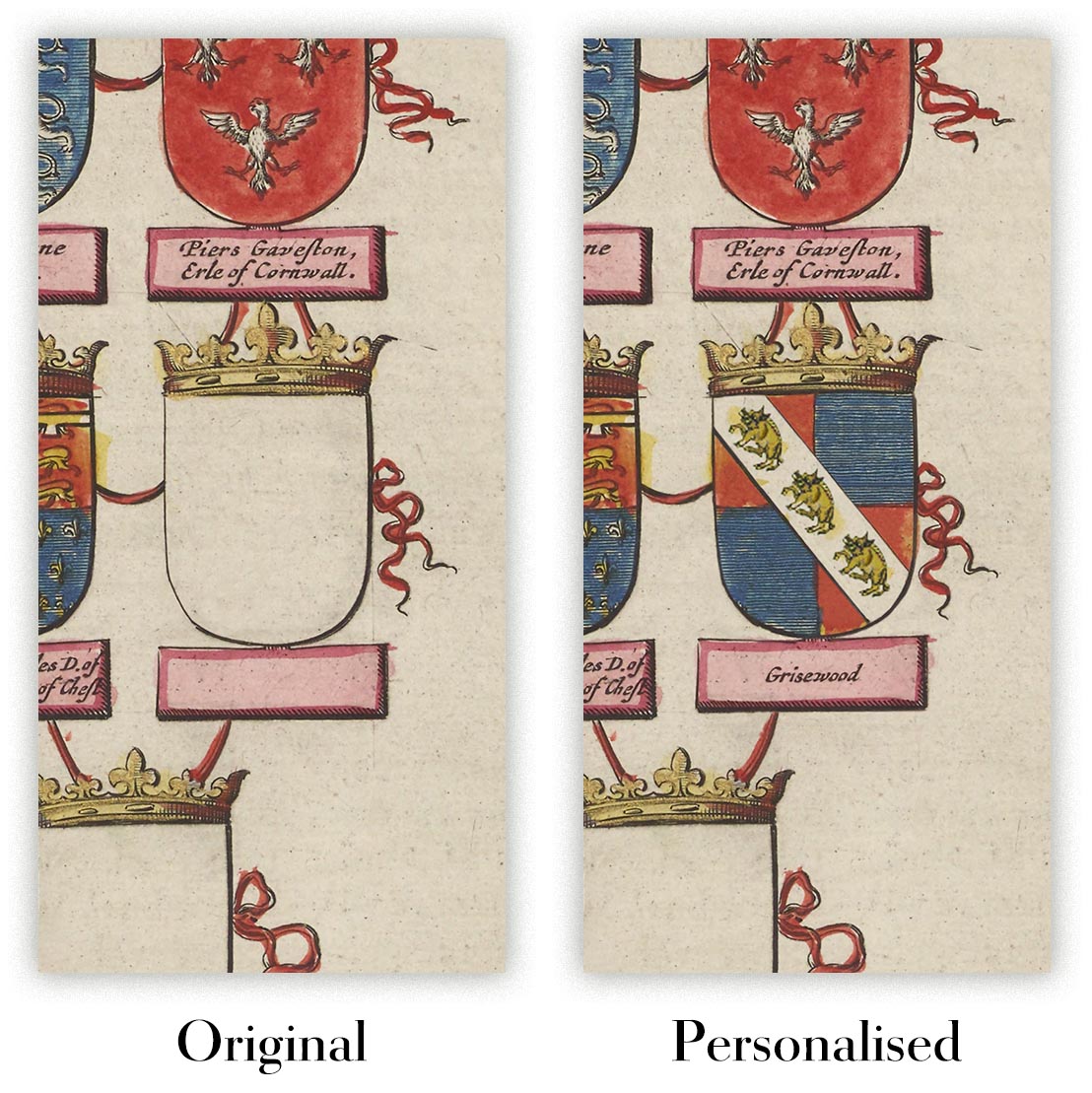
Kartenpersonalisierung
Wenn Sie nach dem perfekten Geschenk zum Jahrestag oder zur Einweihung suchen, kann ich Ihre Karte personalisieren, um sie wirklich einzigartig zu machen. Ich kann beispielsweise eine kurze Nachricht hinzufügen, einen wichtigen Ort hervorheben oder das Wappen Ihrer Familie hinzufügen.
Die Möglichkeiten sind nahezu unbegrenzt. Bitte sehen Sie sich meine Kartenpersonalisierungsseite für einige wunderbare Beispiele dessen, was möglich ist.
Um eine personalisierte Karte zu bestellen, wählen Sie „Personalisieren Sie Ihre Karte“, bevor Sie sie in den Warenkorb legen.
In Kontakt kommen wenn Sie nach komplexeren Anpassungen und Personalisierungen suchen.
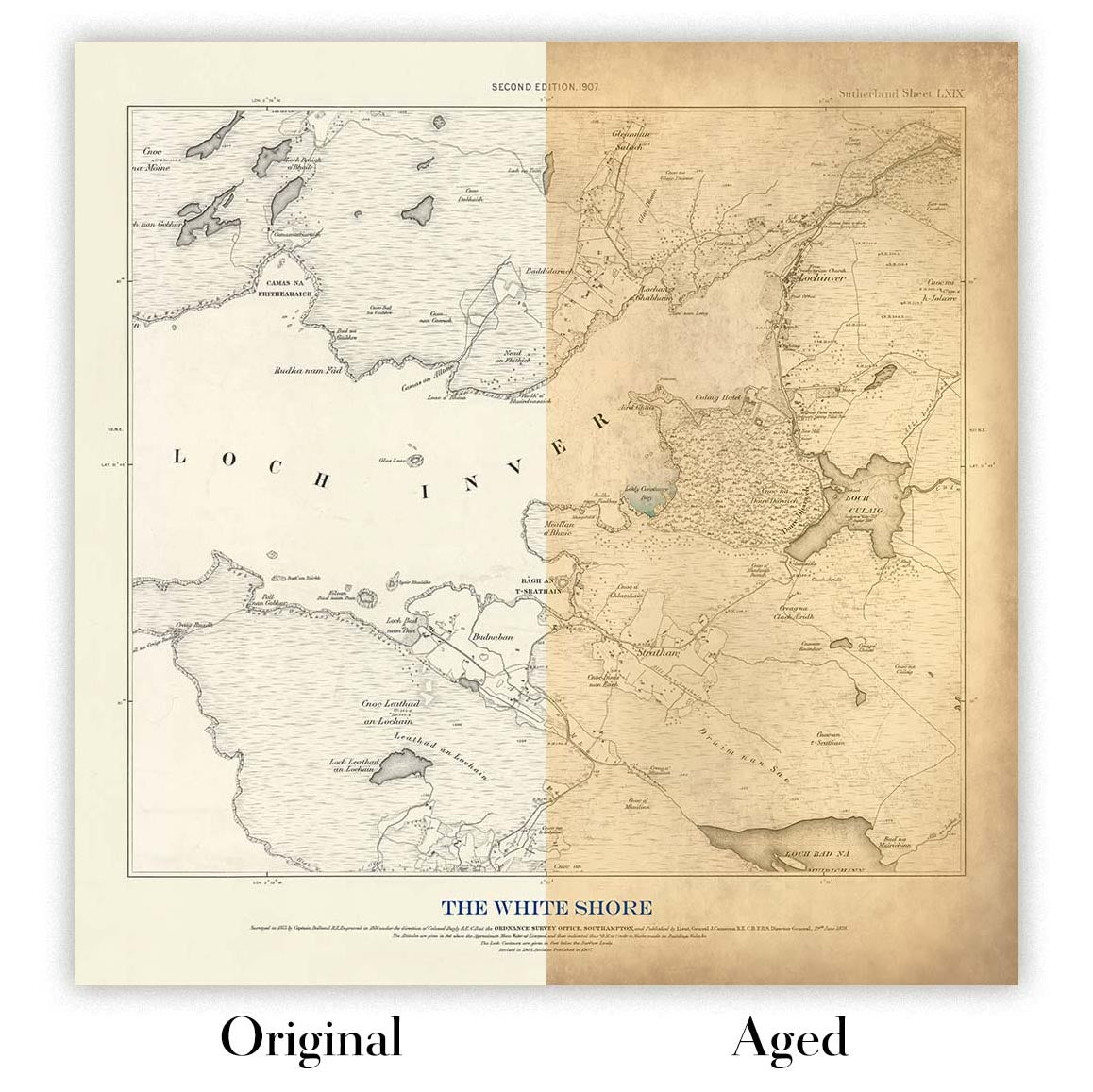
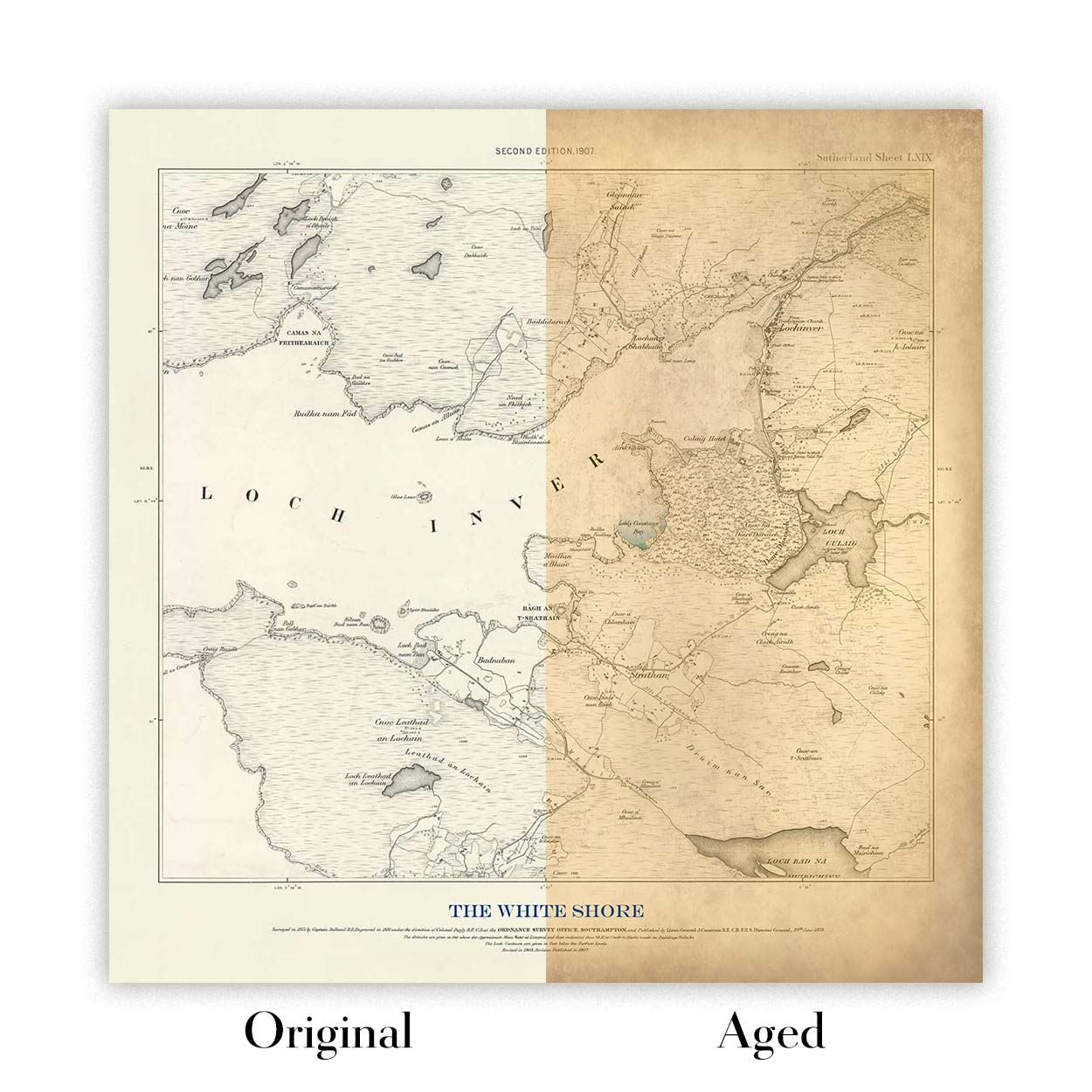
Kartenalterung
Im Laufe der Jahre wurde ich von Kunden hunderte Male gefragt, ob sie eine Karte kaufen könnten, die noch älter.
Nun, jetzt können Sie das, indem Sie „Alter“ auswählen, bevor Sie eine Karte in Ihren Warenkorb legen.
Alle Produktfotos, die Sie auf dieser Seite sehen, zeigen die Karte in ihrer Originalform. So sieht die Karte heute aus.
Wenn Sie „Gealtert“ auswählen, werde ich Ihre Karte von Hand altern lassen. Dazu verwende ich ein spezielles und einzigartiges Verfahren, das ich durch jahrelanges Studium alter Karten und Gespräche mit Forschern zum Verständnis der Chemie alternder Papiere entwickelt habe, und natürlich ... viel Übung!
Wenn Sie sich nicht sicher sind, bleiben Sie bei der Originalfarbe der Karte. Wenn Sie etwas Dunkleres und älter Wenn Sie auf der Suche sind, entscheiden Sie sich für „Aged“.
Sehen Sie einige erstaunliche Beispiele für gealterte Karten.
Seit 1984 restaurieren und fertigen wir Karten und Kunstdrucke an, und wir stehen hinter jedem einzelnen Stück.
Jede Bestellung ist durch unsere 10-Jahres-Garantie und unsere Garantie für beschädigungsfreie Lieferung abgesichert. Sollte Ihr Stück beschädigt bei Ihnen ankommen, ersetzen oder reproduzieren wir es kostenlos. Sollte sonst etwas nicht in Ordnung sein, kontaktieren Sie unser Werkstatt-Team, und wir kümmern uns umgehend darum.
Ausführliche Informationen finden Sie in unseren Rückgabe- und Erstattungsrichtlinien.


