









George of Poděbrady by Alphonse Mucha, 1923
Œuvre d’art authentique
L’œuvre que nous imprimons est fidèlement restituée à partir de la source originale - généralement un musée, une bibliothèque ou une collection privée. Nous ne remplaçons jamais, ne redessinons jamais et n’inventons jamais le travail de l’artiste à l’aide d’une IA générative.
Livraison de Noël & cadeaux

Envoyez-le directement au destinataire
Ajoutez un message cadeau dans votre panier, puis saisissez l’adresse de livraison du destinataire lors du paiement. Nous imprimerons votre message sur une carte. Aucun prix n’est inclus dans le colis.
Délais de livraison
La livraison standard est offerte dans le monde entier et prend généralement environ 3 jours ouvrés. Vous envoyez un cadeau à l’étranger ? Nous fabriquons la plupart des commandes localement, dans le pays du destinataire.
Veuillez prévoir un délai supplémentaire pour la conception et l’approbation du bon à tirer pour les commandes personnalisées. Voir les détails de livraison.
Retours : Les commandes standard peuvent être retournées ou échangées dans les 90 jours suivant la livraison. Les pièces personnalisées et réalisées sur mesure sont généralement exclues des retours pour simple changement d’avis. Voir notre politique de retour.
L’offre du collectionneur
Choisissez deux œuvres éligibles et bénéficiez de 25 % de réduction sur les deux. Vous pouvez associer librement cartes et œuvres d’art.
Aucun code n’est requis. L’offre s’applique automatiquement.
Conditions générales complètes
L’offre du collectionneur s’applique aux œuvres éligibles dans leurs configurations standard fabriquées à la commande. Les dimensions sur mesure, les créations personnalisées et les travaux sur commande sont exclus. Les produits dont le nom contient « personalised » ou « custom » sont généralement exclus.
L’offre est administrée sous la forme de deux remises automatiques distinctes : l’une pour les petits formats et l’autre pour les grands formats. Pour en bénéficier, vous devez acheter deux œuvres éligibles au sein du même groupe de formats. Les cartes et les tirages d’art peuvent être associés librement au sein de chaque groupe.
Par exemple, deux tirages éligibles au format A4 ou 8 × 10 in donnent droit à 25 % de réduction sur les deux. Un tirage en petit format et une œuvre en grand format ne sont pas éligibles ensemble, car des articles appartenant à des groupes de formats différents ne peuvent pas être combinés pour satisfaire à l’exigence de deux articles.
Aucun code de réduction n’est requis. Toute remise applicable est automatiquement appliquée dans votre panier et lors du paiement.
Choisissez votre format
Choisissez votre finition


(Plus d’infos)
Message cadeau & finition personnalisée

Si vous souhaitez ajouter un message cadeau, ou une finition (puzzle, panneau en aluminium, etc.) qui n'est pas disponible ici, veuillez le demander dans la "note de commande" lors de votre passage à la caisse.
Chaque commande est fabriquée sur mesure, donc si vous avez besoin d'ajuster légèrement la taille, ou d'imprimer sur un matériau inhabituel, faites-le nous savoir. Nous avons réalisé des milliers de commandes personnalisées au fil des ans, donc il n'y a (presque) rien que nous ne puissions gérer.
Vous pouvez également nous contacter avant de passer votre commande, si vous le souhaitez !
- Fabriqué en Canada. Livraison sûre
- Arrive en parfait état, sinon nous le remplaçons
-
Livraison & cadeaux de Noël Livraison de Noël & cadeaux
![Voir un exemple en taille réelle de la carte imprimée avec message cadeau]()
Envoyez-le directement au destinataire
Ajoutez un message cadeau dans votre panier, puis saisissez l’adresse de livraison du destinataire lors du paiement. Nous imprimerons votre message sur une carte. Aucun prix n’est inclus dans le colis.
Délais de livraison
La livraison standard est offerte dans le monde entier et prend généralement environ 3 jours ouvrés. Vous envoyez un cadeau à l’étranger ? Nous fabriquons la plupart des commandes localement, dans le pays du destinataire.
Veuillez prévoir un délai supplémentaire pour la conception et l’approbation du bon à tirer pour les commandes personnalisées. Voir les détails de livraison.
Retours : Les commandes standard peuvent être retournées ou échangées dans les 90 jours suivant la livraison. Les pièces personnalisées et réalisées sur mesure sont généralement exclues des retours pour simple changement d’avis. Voir notre politique de retour.
- Besoin d’aide pour commander ?
Le choix des collectionneurs, des décorateurs et de ceux qui souhaitent faire plaisir
Plus de 8 000 avis 5 étoiles


Alphonse Mucha’s George of Poděbrady, completed in 1923, turns a diplomatic confrontation in Prague into a densely orchestrated historical drama. At the...
Continuer la lectureAlphonse Mucha’s George of Poděbrady, completed in 1923, turns a diplomatic confrontation in Prague into a densely orchestrated historical drama. At the centre, the Bohemian king rises in a fur-trimmed robe, his emphatic gesture cutting through the crowded chamber as he rejects a papal demand that he and his kingdom renounce Hussitism. Shocked Roman messengers face an assembly of resolute nobles, while stained-glass windows suffuse the upper part of the scene with amber light. Warm gold, deep red and muted green lend the gathering a ceremonial richness without softening its tension.
Mucha is most widely associated with the sinuous posters and decorative designs he created in fin-de-siècle Paris, yet his later career was increasingly devoted to the history and identity of the Czech and wider Slavic peoples. Here, ornament serves narrative rather than advertisement. Patterned garments, architecture and carefully differentiated faces establish the courtly setting, but the composition is driven by a conflict of religious and political authority. King George is presented not in passive majesty but at the instant of refusal: forceful, morally certain and surrounded by a community whose reactions give the event its dramatic scale.
A closer look
The king’s upright figure anchors the central foreground. His pale fur edging and richly coloured robes distinguish him from the surrounding crowd, while the direction of his arm carries the eye towards the papal delegation at the right. One envoy recoils with an expression of surprise, creating a sharp emotional counterpoint to George’s commanding posture. The figures are packed closely together, overlapping in successive layers so that the chamber feels both grand and unusually compressed—as though everyone present has been drawn into the argument.
Across the left and rear of the composition, Bohemian nobles form a varied chorus of attention, discussion and contemplation. Their costumes introduce passages of purple, blue, russet and green among the dominant reds and golds. Intricate borders, heavy folds and contrasting headwear make individual figures legible within the assembly. Among them are Jan Rokycana, identified by his clerical vestments, and Jan Paleček in a fool’s cap: details that enrich the scene with distinct social and political roles rather than treating the gathering as an anonymous crowd.
Objects near the lower edge carry much of the work’s quieter narrative weight. Books and documents suggest that this is a dispute conducted through doctrine and diplomacy as well as gesture. Most pointedly, a closed volume marked “Roma” rests prominently in the foreground. Set against the king’s animated stance, its stillness becomes conspicuous, crystallising the division between Roman authority and the Hussite position defended within the room. Above, the glowing stained glass provides a luminous counterbalance to the darker mass of figures below, its patterned colour echoing the elaborate textiles of the court.
Context and significance
George of Poděbrady ruled Bohemia in the fifteenth century, in the long aftermath of the Hussite movement associated with the reformer Jan Hus. Mucha’s treatment concentrates on the moment when pressure from Rome meets open resistance. Rather than presenting the episode as a remote tableau, he organises it around visible human responses: astonishment among the envoys, pride among the nobles and unwavering resolve in the king. The result is history conceived as a moral confrontation, communicated through bodies, glances and the charged space between opposing groups.
Created decades after the posters that established Mucha’s international reputation, George of Poděbrady reveals the continuity beneath his changing subjects. His gift for decorative rhythm remains evident in the tiers of faces, sweeping drapery and repeated verticals of architecture, but these elements now support a monumental account of collective memory. The work rewards close attention because its central declaration is surrounded by smaller, more ambiguous reactions: a public act of defiance made vivid through the private expressions of those who witness it.
Choosing the right size and finish
Artwork can feel intimate at smaller sizes and dramatically more architectural at larger ones. Use the room preview, model image and size guide to see how the proportions and scale will work in your space.
If you need an exact size, specialist framing or help planning a larger display, ask our workshop for advice.
The model in the listing images is holding the 16x16in (40x40cm) version of this art print.
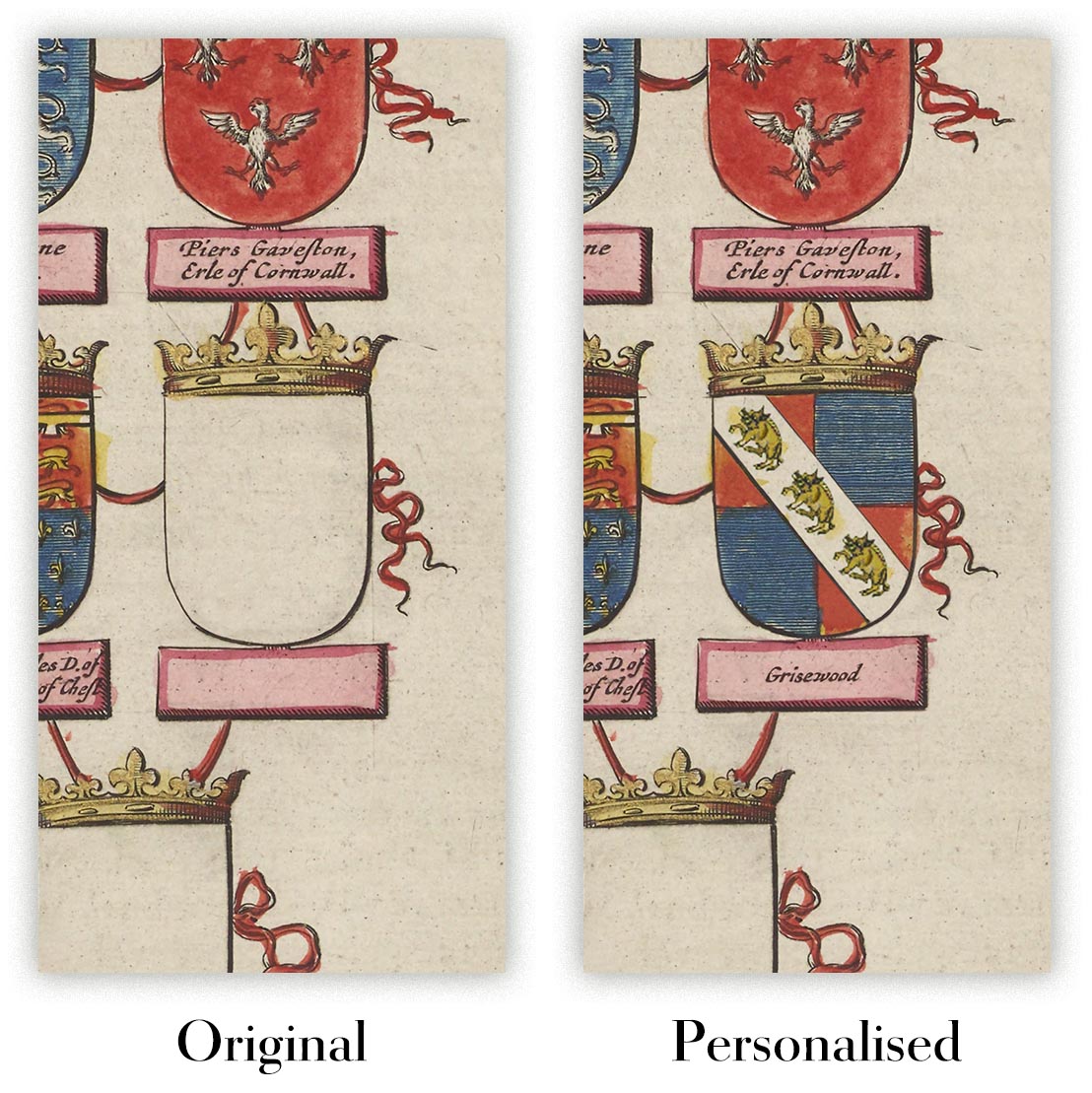
Where personalisation is available, you can add a short title or dedication, or one considered visual detail. See examples of personalised artwork.
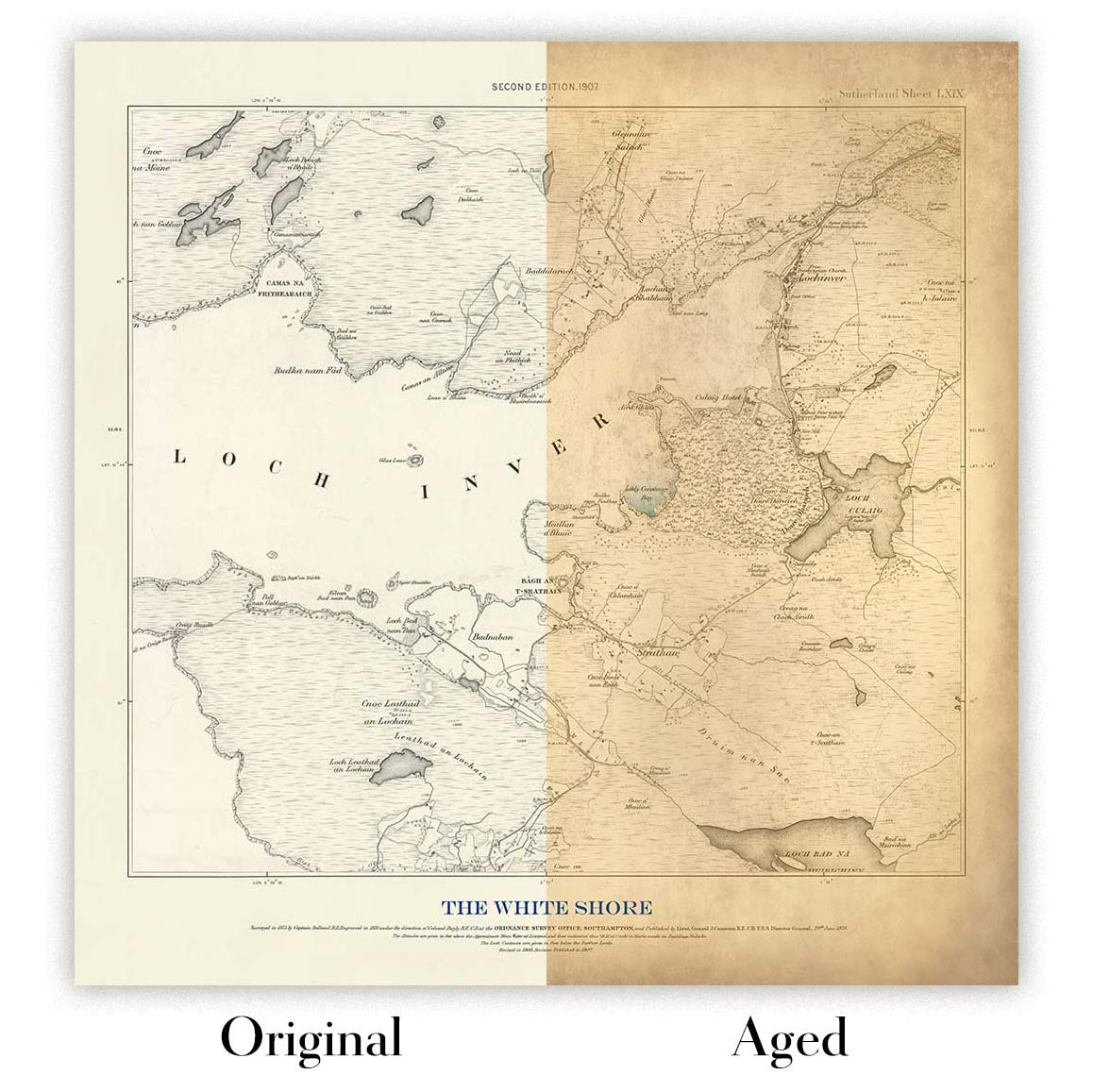
Choose Original to retain the colour and character of the source artwork, or Aged for a warmer, more antique appearance. See examples of our Aged artwork.
Every piece is produced to archival standards using fade-resistant pigment inks on acid-free matte art paper. Choose an art print, framed art print or framed canvas using the finish options above.
Framed art prints use crystal-clear optical acrylic for excellent clarity, lower weight and safer delivery than glass. Each piece arrives professionally framed and ready to hang.
Selected artworks can be produced at statement sizes up to 3 metres (10ft). Custom sizing and specialist framing are also available. If the exact option you need is not listed, contact our workshop.
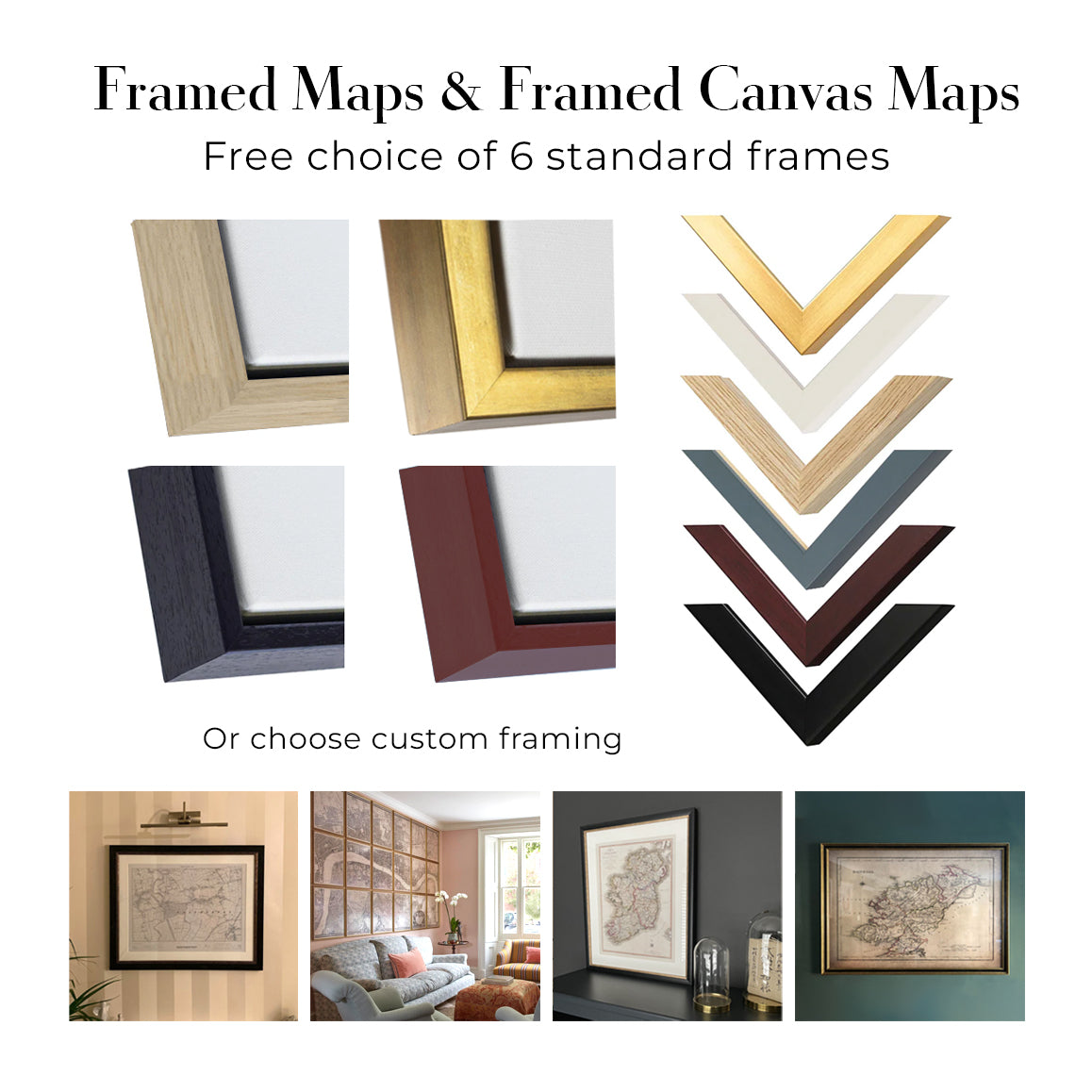
This artwork is also available as a float framed canvas, sometimes known as a shadow gap framed canvas or canvas floater. The work is printed on artist's cotton canvas and then stretched over a handmade box frame. We then "float" the canvas inside a wooden frame, which is available in a range of colours (black, dark brown, oak, antique gold and white). This is a wonderful way to present an art print without glazing in front. See some examples of float framed canvas art and explore the differences between my different finishes.
Alphonse Mucha’s George of Poděbrady, completed in 1923, turns a diplomatic confrontation in Prague into a densely orchestrated historical drama. At the centre, the Bohemian king rises in a fur-trimmed robe, his emphatic gesture cutting through the crowded chamber as he rejects a papal demand that he and his kingdom renounce Hussitism. Shocked Roman messengers face an assembly of resolute nobles, while stained-glass windows suffuse the upper part of the scene with amber light. Warm gold, deep red and muted green lend the gathering a ceremonial richness without softening its tension.
Mucha is most widely associated with the sinuous posters and decorative designs he created in fin-de-siècle Paris, yet his later career was increasingly devoted to the history and identity of the Czech and wider Slavic peoples. Here, ornament serves narrative rather than advertisement. Patterned garments, architecture and carefully differentiated faces establish the courtly setting, but the composition is driven by a conflict of religious and political authority. King George is presented not in passive majesty but at the instant of refusal: forceful, morally certain and surrounded by a community whose reactions give the event its dramatic scale.
A closer look
The king’s upright figure anchors the central foreground. His pale fur edging and richly coloured robes distinguish him from the surrounding crowd, while the direction of his arm carries the eye towards the papal delegation at the right. One envoy recoils with an expression of surprise, creating a sharp emotional counterpoint to George’s commanding posture. The figures are packed closely together, overlapping in successive layers so that the chamber feels both grand and unusually compressed—as though everyone present has been drawn into the argument.
Across the left and rear of the composition, Bohemian nobles form a varied chorus of attention, discussion and contemplation. Their costumes introduce passages of purple, blue, russet and green among the dominant reds and golds. Intricate borders, heavy folds and contrasting headwear make individual figures legible within the assembly. Among them are Jan Rokycana, identified by his clerical vestments, and Jan Paleček in a fool’s cap: details that enrich the scene with distinct social and political roles rather than treating the gathering as an anonymous crowd.
Objects near the lower edge carry much of the work’s quieter narrative weight. Books and documents suggest that this is a dispute conducted through doctrine and diplomacy as well as gesture. Most pointedly, a closed volume marked “Roma” rests prominently in the foreground. Set against the king’s animated stance, its stillness becomes conspicuous, crystallising the division between Roman authority and the Hussite position defended within the room. Above, the glowing stained glass provides a luminous counterbalance to the darker mass of figures below, its patterned colour echoing the elaborate textiles of the court.
Context and significance
George of Poděbrady ruled Bohemia in the fifteenth century, in the long aftermath of the Hussite movement associated with the reformer Jan Hus. Mucha’s treatment concentrates on the moment when pressure from Rome meets open resistance. Rather than presenting the episode as a remote tableau, he organises it around visible human responses: astonishment among the envoys, pride among the nobles and unwavering resolve in the king. The result is history conceived as a moral confrontation, communicated through bodies, glances and the charged space between opposing groups.
Created decades after the posters that established Mucha’s international reputation, George of Poděbrady reveals the continuity beneath his changing subjects. His gift for decorative rhythm remains evident in the tiers of faces, sweeping drapery and repeated verticals of architecture, but these elements now support a monumental account of collective memory. The work rewards close attention because its central declaration is surrounded by smaller, more ambiguous reactions: a public act of defiance made vivid through the private expressions of those who witness it.
Choosing the right size and finish
Artwork can feel intimate at smaller sizes and dramatically more architectural at larger ones. Use the room preview, model image and size guide to see how the proportions and scale will work in your space.
If you need an exact size, specialist framing or help planning a larger display, ask our workshop for advice.
The model in the listing images is holding the 16x16in (40x40cm) version of this art print.
Where personalisation is available, you can add a short title or dedication, or one considered visual detail. See examples of personalised artwork.
Choose Original to retain the colour and character of the source artwork, or Aged for a warmer, more antique appearance. See examples of our Aged artwork.
Every piece is produced to archival standards using fade-resistant pigment inks on acid-free matte art paper. Choose an art print, framed art print or framed canvas using the finish options above.
Framed art prints use crystal-clear optical acrylic for excellent clarity, lower weight and safer delivery than glass. Each piece arrives professionally framed and ready to hang.
Selected artworks can be produced at statement sizes up to 3 metres (10ft). Custom sizing and specialist framing are also available. If the exact option you need is not listed, contact our workshop.
This artwork is also available as a float framed canvas, sometimes known as a shadow gap framed canvas or canvas floater. The work is printed on artist's cotton canvas and then stretched over a handmade box frame. We then "float" the canvas inside a wooden frame, which is available in a range of colours (black, dark brown, oak, antique gold and white). This is a wonderful way to present an art print without glazing in front. See some examples of float framed canvas art and explore the differences between my different finishes.
Nombre de nos cartes et tirages d’art sont choisis comme cadeaux attentionnés pour des intérieurs, des bureaux, des cabinets de travail et des lieux chargés de sens.
Choisissez une option encadrée pour un cadeau prêt à être accroché en toute simplicité, ou optez pour un tirage non encadré si le destinataire préfère peut-être sélectionner son propre cadre.
Nous fabriquons les commandes localement dans 23 pays à travers le monde, afin que les cadeaux puissent souvent être produits à proximité du destinataire. Cela permet une livraison plus rapide, un transport plus sûr et d’éviter les surprises liées aux frais de douane ou droits d’importation.
- Nous pouvons livrer directement au destinataire
- Les pièces encadrées arrivent prêtes à être accrochées
- Les tirages non encadrés sont soigneusement emballés dans un tube de protection robuste
- Presque chaque commande est fabriquée localement, pour des cadeaux plus rapides et plus sûrs
- Les retours sous 90 jours laissent au destinataire le temps de se décider
Si vous hésitez sur le choix à faire, veuillez nous contacter. Nous pouvons vous aider à choisir la carte, le format, la finition ou l’option de livraison appropriés.
Pour la plupart des commandes, le délai de livraison est d'environ 3 jours ouvrables. Les produits personnalisés et sur mesure prennent plus de temps, car je dois faire la personnalisation et vous l'envoyer pour approbation, ce qui prend généralement 1 ou 2 jours.
Veuillez noter que les grandes commandes encadrées prennent généralement plus de temps à réaliser et à livrer.
Si vous avez besoin que votre commande arrive à une date précise, veuillez me contacter avant de passer votre commande afin que nous puissions trouver le meilleur moyen de nous assurer que vous receviez votre commande à temps.
J'imprime et encadre des cartes et des œuvres d'art dans 23 pays à travers le monde. Cela signifie que votre commande sera réalisée localement, ce qui réduit le temps de livraison et garantit qu'elle ne sera pas endommagée pendant le transport. Vous ne paierez jamais de droits de douane ou d'importation, et nous mettrons moins de CO2 dans l'air.
Toutes mes cartes et impressions artistiques sont bien emballées et envoyées dans un tube robuste si non encadrées, ou entourées de mousse si encadrées.
J'essaie d'envoyer toutes les commandes dans les 1 ou 2 jours suivant la réception de votre commande, bien que certains produits (comme les masques, les mugs et les sacs fourre-tout) puissent prendre plus de temps à réaliser.
Si vous choisissez Livraison Express lors du paiement, nous donnerons la priorité à votre commande et l'enverrons par un service de messagerie de 1 jour (Fedex, DHL, UPS, Parcelforce).
La livraison le lendemain est également disponible dans certains pays (États-Unis, Royaume-Uni, Singapour, Émirats Arabes Unis), mais veuillez essayer de commander tôt dans la journée afin que nous puissions l'envoyer à temps.
Lisez mon guide complet sur la livraison et la production locale
Mon cadre standard est un cadre en bois dur noir de style galerie. Il est simple et a un aspect assez moderne. Mon cadre standard mesure environ 20 mm (0,8 po) de large.
J'utilise de l'acrylique super clair (perspex/acrylite) pour le verre du cadre. C'est plus léger et plus sûr que le verre - et cela a meilleur aspect, car la réflexivité est plus faible.
Six couleurs de cadre standard sont disponibles gratuitement (noir, marron foncé, gris foncé, chêne, blanc et or antique). Des encadrements et montages/matelassages personnalisés sont disponibles si vous recherchez autre chose.
La plupart des cartes, œuvres d'art et illustrations sont également disponibles sous forme de toile encadrée. Nous utilisons une toile en coton mate (non brillante), que nous tendons sur un cadre en bois de boîte provenant de sources durables, puis nous 'flottions' la pièce à l'intérieur d'un cadre en bois. Le résultat final est assez beau, et il n'y a pas de vitrage qui gêne.
Tous les cadres sont fournis "prêts à accrocher", avec soit une corde, soit des supports à l'arrière. Les très grands cadres auront des plaques de suspension lourdes et/ou une latte de montage. Si vous avez des questions, veuillez nous contacter.
Voir quelques exemples de mes cartes encadrées et de cartes en toile encadrées.
Alternativement, je peux également fournir de vieilles cartes et œuvres d'art sur toile, sur panneau en mousse, en coton et d'autres matériaux.
Si vous souhaitez encadrer votre carte ou œuvre d'art vous-même, veuillez lire d'abord mon guide des tailles.
Nous travaillons avec des architectes d’intérieur, des établissements hôteliers, des professionnels de l’immobilier, des bureaux et des acheteurs d’entreprise, pour des pièces individuelles comme pour des projets coordonnés de plus grande envergure.
Cette œuvre peut être adaptée à un mur, une pièce ou un projet spécifique, et notre atelier peut vous aider à coordonner les dimensions, le matériau et l’encadrement avant la production.
- Dimensions exactes, grand format et sur mesure
- Encadrement, montage et matériaux alternatifs sur mesure
- Pièces coordonnées pour plusieurs pièces ou emplacements
- Personnalisation de l’œuvre, pour ajuster la couleur et le style de la pièce
- Conseils de notre atelier sur l’œuvre et l’encadrement
- Production locale pour des projets dans le monde entier
Échangez avec notre équipe Trade & Projects au sujet de cette pièce
Chaque impression artistique restaurée commence par l’œuvre originale de l’artiste — jamais par un substitut généré par IA.
Notre atelier de Londres travaille à partir de documents source soigneusement sélectionnés dans des musées, bibliothèques, archives et collections privées. Nous restaurons les dommages liés à l’âge, les couleurs passées et les défauts de reproduction, tout en préservant la composition, les coups de pinceau, le trait, la texture et le caractère d’époque de l’artiste.
Nous n’utilisons pas d’IA générative pour redessiner, réinterpréter ou inventer l’œuvre. La restauration numérique est utilisée uniquement pour récupérer et reproduire l’œuvre originale aussi fidèlement que possible.
Une fois restaurée, l’œuvre maîtresse est préparée dans le format et la finition que vous avez choisis. Votre pièce est ensuite imprimée et, le cas échéant, encadrée à proximité de sa destination de livraison.
Nos impressions d’art giclée utilisent un papier mat d’archivage sans acide de 200 g/m² et des encres pigmentaires résistantes à la décoloration pour une finition riche, digne d’un musée. Les impressions d’art encadrées utilisent un acrylique optique cristallin et arrivent prêtes à être accrochées.
Des toiles encadrées et des éditions spécialisées sur papier coton-rag sont également disponibles. En savoir plus sur nos matériaux et finitions.
Nous restaurons et produisons des cartes et des tirages d’art depuis 1984, et nous garantissons chaque pièce.
Chaque commande est couverte par notre garantie de 10 ans et notre garantie de livraison sans dommage. Si votre pièce arrive endommagée, nous la remplacerons ou la referons gratuitement. Si quoi que ce soit d’autre ne vous donne pas entière satisfaction, contactez notre équipe d’atelier et nous y remédierons rapidement.
Consultez notre politique de retours et de remboursement pour plus de détails.


