














Rare Old City Map of Rome by Wenng, 1846: St Peter's Basilica, Colosseum, Roman Forum, Piazza Navona, Tiber River
Restored in our London workshop from the original 1846 map and printed to museum-grade archival standards. Full description
The Collector’s Offer
Choose two eligible works and receive 20% off both. Choose three and the lowest-priced one is complimentary, a maximum saving of 33%.
Mix and match eligible standard maps and fine-art prints. No code is required; the offer is applied automatically at checkout.
Standard made-to-order configurations are included. Bespoke sizes, personalised designs and commissioned work are excluded.
Need delivery to different addresses? Contact us before ordering.The Collector’s Offer
Choose two eligible works and receive 20% off both. Choose three and the lowest-priced one is complimentary, a maximum saving of 33%.
Mix and match eligible standard maps and fine-art prints. No code is required; the offer is applied automatically at checkout.
Standard made-to-order configurations are included. Bespoke sizes, personalised designs and commissioned work are excluded.
Need delivery to different addresses? Contact us before ordering. Restored in London • Printed and framed in Canada

Restored from the original 1846 map and printed to museum-grade archival standards. Full description
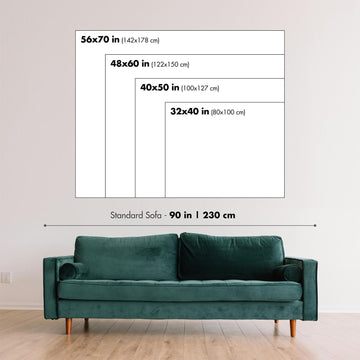
Choose your size
Choose your finish


(More info)
Gift message & custom finish

If you want to add a gift message, or a finish (jigsaw, aluminium board, etc.) that is not available here, please request it in the "order note" when you check out.
Every order is custom made, so if you need the size adjusted slightly, or printed on an unusual material, just let us know. We've done thousands of custom orders over the years, so there's (almost) nothing we can't manage.
You can also contact us before you order, if you prefer!
Own a piece of history
8,000+ five-star reviews


Rom. Rioni, Regionem od. Abtheilungen Rom's is Gustav Wenng’s 1846 portrait of Papal Rome, a scarce Munich-engraved plan prepared for Ernst Förster’s...
Continue readingRom. Rioni, Regionem od. Abtheilungen Rom's is Gustav Wenng’s 1846 portrait of Papal Rome, a scarce Munich-engraved plan prepared for Ernst Förster’s Handbuch für Reisende in Italien. In vivid tints and crisp linework, Wenng color-codes the rioni, letting the Tiber’s sinuous course organize the city’s narrative from north to south. A precise legend deciphers churches, palazzi, and antiquities, while an inset orients travelers to the surrounding approaches. The result is a notably intelligent city map: it captures Rome poised on the threshold of transformation, just before the urban interventions that would accompany Italian unification. True to Wenng’s 19th-century craft, it marries aesthetic poise with practical clarity—an elegant digest of neighborhoods, routes, and landmarks intended to be read in the hand as much as admired at a desk.
At the city’s northern gateway, the plan follows the ceremonial axis from Piazza del Popolo down Via del Corso to Piazza Venezia, framing a traveler’s Rome of promenades and processions. Wenng anchors the Campus Martius with Piazza Navona and the Renaissance grid of Parione and Regola: Via dei Coronari’s antique dealers, Via dei Banchi Vecchi’s banker palazzi, and the rulers-straight Via Giulia parallel the river. Along the quays, Via di Ripetta meets the Porto di Ripetta, while the antique Via Flaminia presses toward the hinterland. The web of Via della Scrofa, Via di Campo Marzio, and Via di Monte Brianzo reveals a lived-in fabric of workshops, churches, and markets—an intimate cartographic vignette of Rome’s mercantile heart in the mid-19th century.
Across the river, the map emphasizes the distinctive character of Borgo and Trastevere. St. Peter’s Basilica crowns the west bank, linked to Castel Sant’Angelo by Ponte Sant’Angelo, while the long, shaded ribbon of Via della Lungara traces Trastevere’s scholarly and botanical quarter toward the Orto Botanico. Wenng underscores the pre-modern texture of Borgo with the tight lanes that later eras would sweep aside; the broad vista of Via della Conciliazione, for instance, lies in the future, making this plan a precious witness to the district’s medieval fabric. Gardens and precinct walls—Vatican groves, convent closures, and riverfront spaces like Via del Porto—read as calm green solids against the urban mosaic, guiding travelers toward oases of shade and devout contemplation.
South and east of the Capitoline, the rioni of Monti, Campitelli, and Sant’Angelo converge on the antique city. The Colosseum, Arch of Constantine, and the Roman Forum step forward in clear symbology, with surrounding lanes—Via dei Serpenti, Via Tor de’ Conti, and Via di San Teodoro—braiding together hill and valley. Processional routes such as Via San Giovanni in Laterano and the old Via Labicana lead the eye from the Lateran toward the ruins. Here, Wenng’s legend comes into its own, distinguishing ancient monuments from papal-era churches and noble residences. It is also a record of what is not yet: the grand cut of Via dei Fori Imperiali belongs to the future, making this sheet a rare, unvarnished view of Rome’s archeological core before modern boulevards recast its topography.
Wenng’s plan also celebrates Rome’s parks and terraces—the Pincian Gardens cresting above Piazza del Popolo, the spreading grounds that would evolve into Villa Borghese, and shaded precincts tucked within monastery walls. In the Trevi and Colonna quarters, routes like Via del Collegio Romano and Via delle Tre Cannelle knit together the Quirinal slopes, foreshadowing later axes such as Via del Tritone and Via Vittorio Veneto without yet disturbing the baroque weave. The inset evokes the Campagna’s roadways, while the main sheet highlights thoroughfares—Via Giulia, Via dei Giubbonari, Via dei Marmorari—that broadcast the city’s artisanal memory. As a city map, this is especially notable for its synthesis: an at-a-glance guide for the 1840s traveler and a meticulous chronicle of Rome on the eve of modernity.
Streets and roads on this map
- Via A. C. C.
- Via della Conciliazione
- Via della Lungara
- Via dei Banchi Vecchi
- Via dei Coronari
- Via dei Giubbonari
- Via dei Marmorari
- Via dei Fori Imperiali
- Via di Campo Marzio
- Via di Monte Brianzo
- Via di Ripetta
- Via Flaminia
- Via Giulia
- Via Labicana
- Via Magna Grecia
- Via Nazionale
- Via dei Serpenti
- Via del Corso
- Via del Collegio Romano
- Via del Porto
- Via della Scrofa
- Via del Tritone
- Via di San Teodoro
- Via della Storia
- Via dell'Università
- Via San Giovanni in Laterano
- Via delle Tre Cannelle
- Via Tor de' Conti
- Via Vittorio Veneto
- Piazza Navona
- Piazza del Popolo
- Piazza Venezia
Notable Features & Landmarks
- Several notable landmarks and buildings identified in the various rioni.
- Distinct areas for public parks and gardens.
- The Tiber River prominently running through the map.
- Inset map featuring surrounding regions or notable features.
- A key or legend explaining various symbols used throughout the map.
Historical and design context
- 1846 plan of Rome engraved in Munich; issued in Ernst Förster’s Handbuch für Reisende in Italien.
- Created by Gustav Wenng, noted for detailed travel-guide maps reflecting evolving 19th-century cartographic techniques.
- Depicts Rome’s rioni, major landmarks, streets, and parks, emphasizing urban organization and historical significance.
- Design combines vibrant colors with intricate engraving for both clarity and aesthetic appeal.
- Captures mid-19th-century Rome on the cusp of transformations leading to Italian unification.
Please double check the images to make sure that a specific town or place is shown on this map. You can also get in touch and ask us to check the map for you.
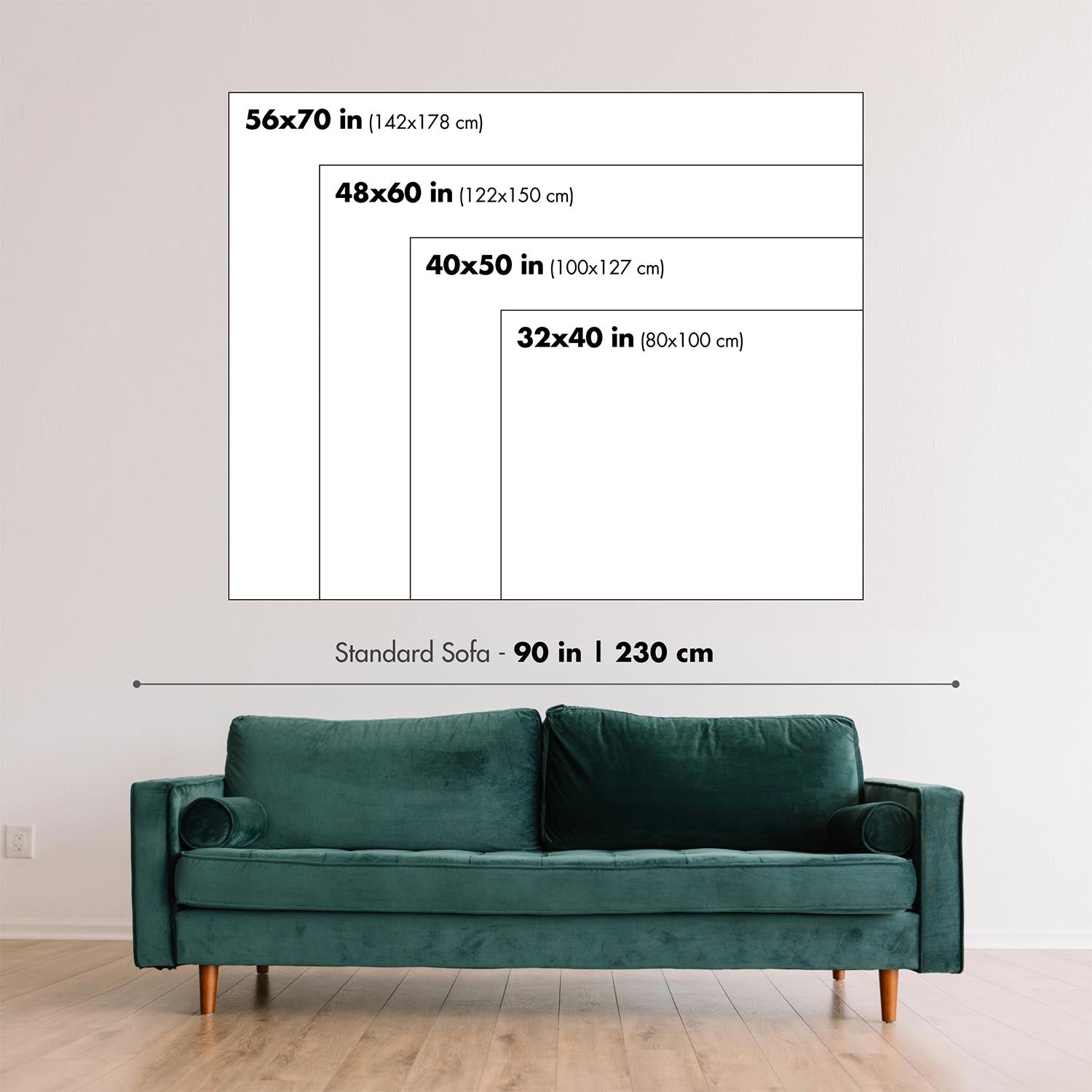
This map looks great at every size, but I always recommend going for a larger size if you have space. That way you can easily make out all of the details.
This map looks amazing at sizes all the way up to 50in (125cm). If you are looking for a larger map, please get in touch.
The model in the listing images is holding the 18x24in (45x60cm) version of this map.
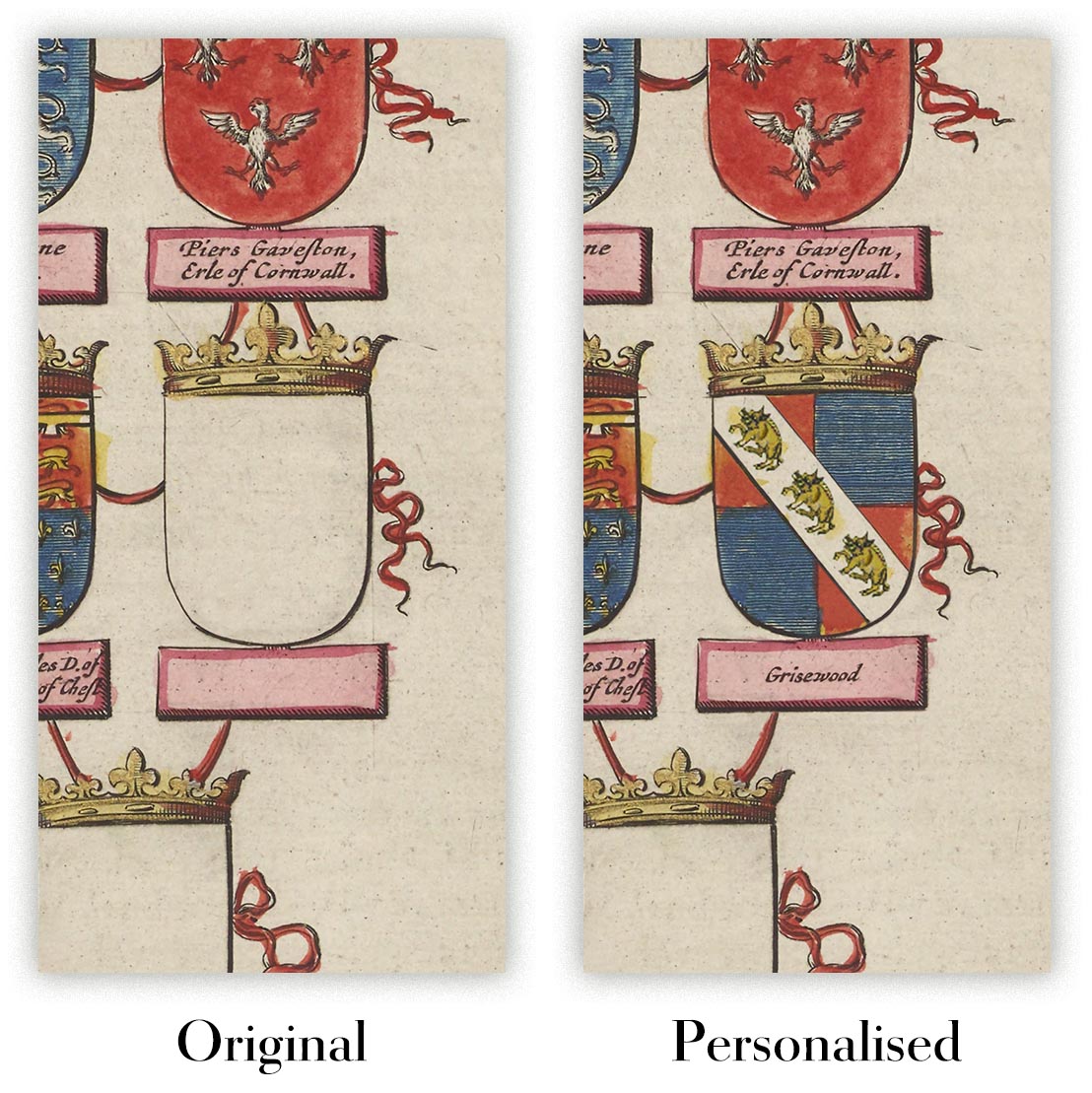
The fifth listing image shows an example of my map personalisation service.
If you’re looking for something slightly different, check out my collection of the best old maps to see if something else catches your eye.
Please contact me to check if a certain location, landmark or feature is shown on this map.
This would make a wonderful birthday, Christmas, Father's Day, work leaving, anniversary or housewarming gift for someone from the areas covered by this map.
This map is available as a giclée print on acid free archival matte paper, or you can buy it framed. The frame is a nice, simple black frame that suits most aesthetics. Please get in touch if you'd like a different frame colour or material. My frames are glazed with super-clear museum-grade acrylic (perspex/acrylite), which is significantly less reflective than glass, safer, and will always arrive in perfect condition.
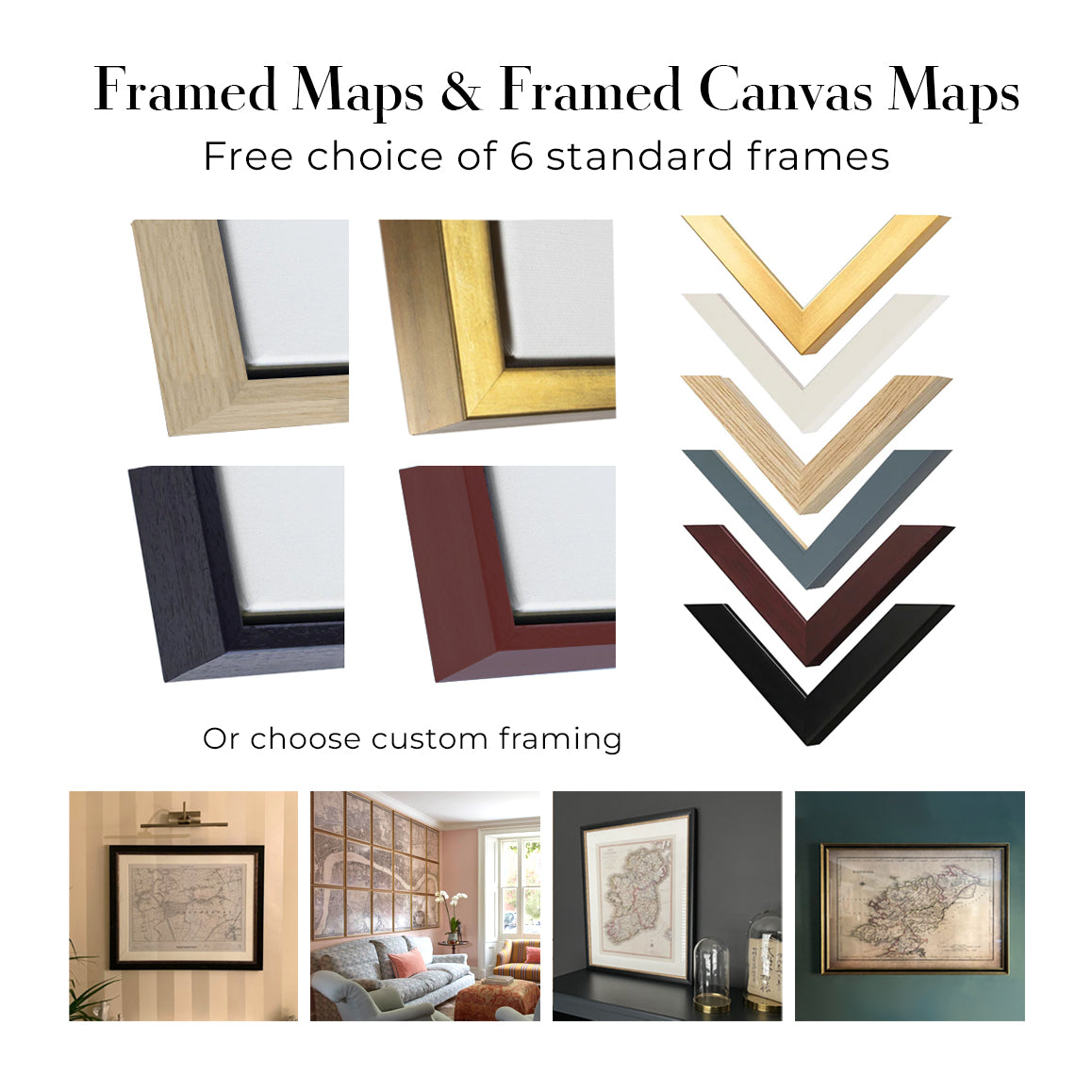
This map is also available as a float framed canvas, sometimes known as a shadow gap framed canvas or canvas floater. The map is printed on artist's cotton canvas and then stretched over a handmade box frame. We then "float" the canvas inside a wooden frame, which is available in a range of colours (black, dark brown, oak, antique gold and white). This is a wonderful way to present a map without glazing in front. See some examples of float framed canvas maps and explore the differences between my different finishes.
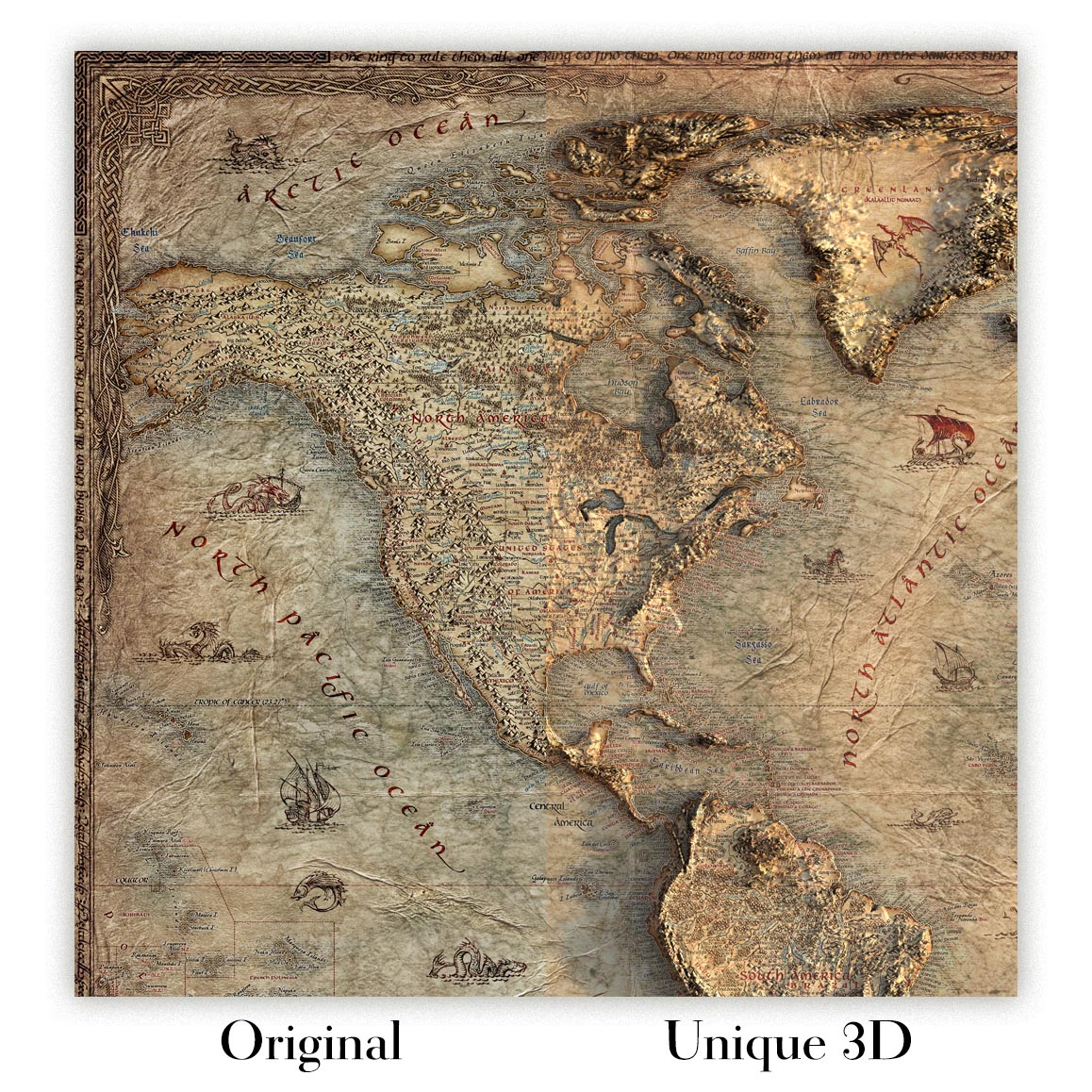
For something truly unique, this map is also available in "Unique 3D", our trademarked process that dramatically transforms the map so that it has a wonderful sense of depth. We combine the original map with detailed topography and elevation data, so that mountains and the terrain really "pop". For more info and examples of 3D maps, check my Unique 3D page.
Rom. Rioni, Regionem od. Abtheilungen Rom's is Gustav Wenng’s 1846 portrait of Papal Rome, a scarce Munich-engraved plan prepared for Ernst Förster’s Handbuch für Reisende in Italien. In vivid tints and crisp linework, Wenng color-codes the rioni, letting the Tiber’s sinuous course organize the city’s narrative from north to south. A precise legend deciphers churches, palazzi, and antiquities, while an inset orients travelers to the surrounding approaches. The result is a notably intelligent city map: it captures Rome poised on the threshold of transformation, just before the urban interventions that would accompany Italian unification. True to Wenng’s 19th-century craft, it marries aesthetic poise with practical clarity—an elegant digest of neighborhoods, routes, and landmarks intended to be read in the hand as much as admired at a desk.
At the city’s northern gateway, the plan follows the ceremonial axis from Piazza del Popolo down Via del Corso to Piazza Venezia, framing a traveler’s Rome of promenades and processions. Wenng anchors the Campus Martius with Piazza Navona and the Renaissance grid of Parione and Regola: Via dei Coronari’s antique dealers, Via dei Banchi Vecchi’s banker palazzi, and the rulers-straight Via Giulia parallel the river. Along the quays, Via di Ripetta meets the Porto di Ripetta, while the antique Via Flaminia presses toward the hinterland. The web of Via della Scrofa, Via di Campo Marzio, and Via di Monte Brianzo reveals a lived-in fabric of workshops, churches, and markets—an intimate cartographic vignette of Rome’s mercantile heart in the mid-19th century.
Across the river, the map emphasizes the distinctive character of Borgo and Trastevere. St. Peter’s Basilica crowns the west bank, linked to Castel Sant’Angelo by Ponte Sant’Angelo, while the long, shaded ribbon of Via della Lungara traces Trastevere’s scholarly and botanical quarter toward the Orto Botanico. Wenng underscores the pre-modern texture of Borgo with the tight lanes that later eras would sweep aside; the broad vista of Via della Conciliazione, for instance, lies in the future, making this plan a precious witness to the district’s medieval fabric. Gardens and precinct walls—Vatican groves, convent closures, and riverfront spaces like Via del Porto—read as calm green solids against the urban mosaic, guiding travelers toward oases of shade and devout contemplation.
South and east of the Capitoline, the rioni of Monti, Campitelli, and Sant’Angelo converge on the antique city. The Colosseum, Arch of Constantine, and the Roman Forum step forward in clear symbology, with surrounding lanes—Via dei Serpenti, Via Tor de’ Conti, and Via di San Teodoro—braiding together hill and valley. Processional routes such as Via San Giovanni in Laterano and the old Via Labicana lead the eye from the Lateran toward the ruins. Here, Wenng’s legend comes into its own, distinguishing ancient monuments from papal-era churches and noble residences. It is also a record of what is not yet: the grand cut of Via dei Fori Imperiali belongs to the future, making this sheet a rare, unvarnished view of Rome’s archeological core before modern boulevards recast its topography.
Wenng’s plan also celebrates Rome’s parks and terraces—the Pincian Gardens cresting above Piazza del Popolo, the spreading grounds that would evolve into Villa Borghese, and shaded precincts tucked within monastery walls. In the Trevi and Colonna quarters, routes like Via del Collegio Romano and Via delle Tre Cannelle knit together the Quirinal slopes, foreshadowing later axes such as Via del Tritone and Via Vittorio Veneto without yet disturbing the baroque weave. The inset evokes the Campagna’s roadways, while the main sheet highlights thoroughfares—Via Giulia, Via dei Giubbonari, Via dei Marmorari—that broadcast the city’s artisanal memory. As a city map, this is especially notable for its synthesis: an at-a-glance guide for the 1840s traveler and a meticulous chronicle of Rome on the eve of modernity.
Streets and roads on this map
- Via A. C. C.
- Via della Conciliazione
- Via della Lungara
- Via dei Banchi Vecchi
- Via dei Coronari
- Via dei Giubbonari
- Via dei Marmorari
- Via dei Fori Imperiali
- Via di Campo Marzio
- Via di Monte Brianzo
- Via di Ripetta
- Via Flaminia
- Via Giulia
- Via Labicana
- Via Magna Grecia
- Via Nazionale
- Via dei Serpenti
- Via del Corso
- Via del Collegio Romano
- Via del Porto
- Via della Scrofa
- Via del Tritone
- Via di San Teodoro
- Via della Storia
- Via dell'Università
- Via San Giovanni in Laterano
- Via delle Tre Cannelle
- Via Tor de' Conti
- Via Vittorio Veneto
- Piazza Navona
- Piazza del Popolo
- Piazza Venezia
Notable Features & Landmarks
- Several notable landmarks and buildings identified in the various rioni.
- Distinct areas for public parks and gardens.
- The Tiber River prominently running through the map.
- Inset map featuring surrounding regions or notable features.
- A key or legend explaining various symbols used throughout the map.
Historical and design context
- 1846 plan of Rome engraved in Munich; issued in Ernst Förster’s Handbuch für Reisende in Italien.
- Created by Gustav Wenng, noted for detailed travel-guide maps reflecting evolving 19th-century cartographic techniques.
- Depicts Rome’s rioni, major landmarks, streets, and parks, emphasizing urban organization and historical significance.
- Design combines vibrant colors with intricate engraving for both clarity and aesthetic appeal.
- Captures mid-19th-century Rome on the cusp of transformations leading to Italian unification.
Please double check the images to make sure that a specific town or place is shown on this map. You can also get in touch and ask us to check the map for you.
This map looks great at every size, but I always recommend going for a larger size if you have space. That way you can easily make out all of the details.
This map looks amazing at sizes all the way up to 50in (125cm). If you are looking for a larger map, please get in touch.
The model in the listing images is holding the 18x24in (45x60cm) version of this map.
The fifth listing image shows an example of my map personalisation service.
If you’re looking for something slightly different, check out my collection of the best old maps to see if something else catches your eye.
Please contact me to check if a certain location, landmark or feature is shown on this map.
This would make a wonderful birthday, Christmas, Father's Day, work leaving, anniversary or housewarming gift for someone from the areas covered by this map.
This map is available as a giclée print on acid free archival matte paper, or you can buy it framed. The frame is a nice, simple black frame that suits most aesthetics. Please get in touch if you'd like a different frame colour or material. My frames are glazed with super-clear museum-grade acrylic (perspex/acrylite), which is significantly less reflective than glass, safer, and will always arrive in perfect condition.
This map is also available as a float framed canvas, sometimes known as a shadow gap framed canvas or canvas floater. The map is printed on artist's cotton canvas and then stretched over a handmade box frame. We then "float" the canvas inside a wooden frame, which is available in a range of colours (black, dark brown, oak, antique gold and white). This is a wonderful way to present a map without glazing in front. See some examples of float framed canvas maps and explore the differences between my different finishes.
For something truly unique, this map is also available in "Unique 3D", our trademarked process that dramatically transforms the map so that it has a wonderful sense of depth. We combine the original map with detailed topography and elevation data, so that mountains and the terrain really "pop". For more info and examples of 3D maps, check my Unique 3D page.
Many of our maps and art prints are chosen as thoughtful gifts for homes, offices, studies and meaningful places.
Choose a framed option for the easiest ready-to-hang gift, or choose an unframed print if the recipient may prefer to select their own frame.
We make orders locally in 24 countries around the world, so gifts can often be produced close to the recipient. This helps them arrive faster, travel more safely, and avoid customs or import duty surprises.
- We can deliver directly to the recipient
- Framed pieces arrive ready to hang
- Unframed prints are carefully packed in a strong protective tube
- Almost every order is made locally, for faster, safer gifting
- 90-day returns give the recipient time to decide
If you are not sure what to choose, please contact us. We can help you pick the right map, size, finish or delivery option.
Most orders are made locally and delivered in around 2–3 working days, depending on the product, size and destination.
We print and frame maps and artwork in 24 countries around the world, so your order is usually made close to you or your recipient. That means faster delivery, less time in transit, and no customs or import duty surprises.
Personalised and customised pieces usually take an extra 1–2 working days, because we prepare your design and send it to you for approval before printing.
Very large framed orders can take a little longer, as they need extra care in production and delivery.
Every order is carefully packaged: unframed prints are sent in a strong protective tube, while framed pieces are securely packed with protective materials around the frame.
If you need your order by a particular date, please contact us before ordering. We’ll check the best production route and delivery option for your location.
Express delivery is available at checkout for most countries. Next-day delivery is available in the UK, US, Singapore and the UAE.
Your order is covered by our 90-day returns policy and 10-year guarantee.
Our standard frame is a gallery-style black ash hardwood frame, with a simple, modern look. It is approximately 20mm (0.8in) wide. You can also view some lovely customer photos of framed maps and art.
We use super-clear acrylic glazing, also known as Perspex or Acrylite, instead of traditional glass. It is lighter, safer, and has lower reflectivity, giving the artwork a clearer, cleaner appearance.
Six standard frame colours are available at no extra cost: black, dark brown, dark grey, oak, white, and antique gold. Custom framing and mounting/matting is also available for customers looking for something more specific.
Most maps, art prints, and illustrations are also available as a framed canvas. We use matte cotton canvas, stretch it over a sustainably sourced wooden box frame, and then float the piece within a wooden outer frame. The finished result is beautifully presented, with no glazing between you and the artwork.
All frames are supplied ready to hang, with either string or brackets fitted to the back. Very large frames will include heavy-duty hanging plates and/or a mounting baton. If you have any questions, please get in touch.
We can also supply old maps and artwork on canvas, foam board, cotton rag, and other materials.
If you would prefer to frame your map or artwork yourself, please read our size guide before ordering.
We work with interior designers, hospitality businesses, property professionals, offices and corporate buyers on individual pieces and larger coordinated projects.
This map can be adapted for a particular wall, room or project, and our workshop can help coordinate the dimensions, material and framing before production.
- Exact, oversized and made-to-measure dimensions
- Custom framing, mounting and alternative materials
- Coordinated pieces for several rooms or locations
- Map personalisation, to mark important locations or add extra details
- Map and framing guidance from our workshop
- Local production for projects around the world
Every Unique Maps piece begins with an authentic cartographic source or an original design from our London studio.
For our historic maps, we source rare originals from libraries, archives, auction houses and private collections around the world. We carefully restore each map for print—repairing age-related damage, balancing colour and improving clarity while preserving its original detail, texture and character.
Once restored, the map is prepared for your chosen size and finish. Your piece is then printed and, where selected, framed close to its delivery destination.
Our map prints use acid-free 200gsm archival matte paper and fade-resistant pigment inks, creating a rich, non-glossy finish designed to last. Framed maps use crystal-clear optical acrylic and arrive ready to hang.
Canvas, cotton-rag and other specialist presentations are also available. Learn more about our materials and finishes.
Personalising your map
You can add a short title or dedication, mark one meaningful place, or request one considered visual detail. For personalised designs, we send a proof before printing and you can request changes before approval.
For more complex bespoke commissions, contact our design team.
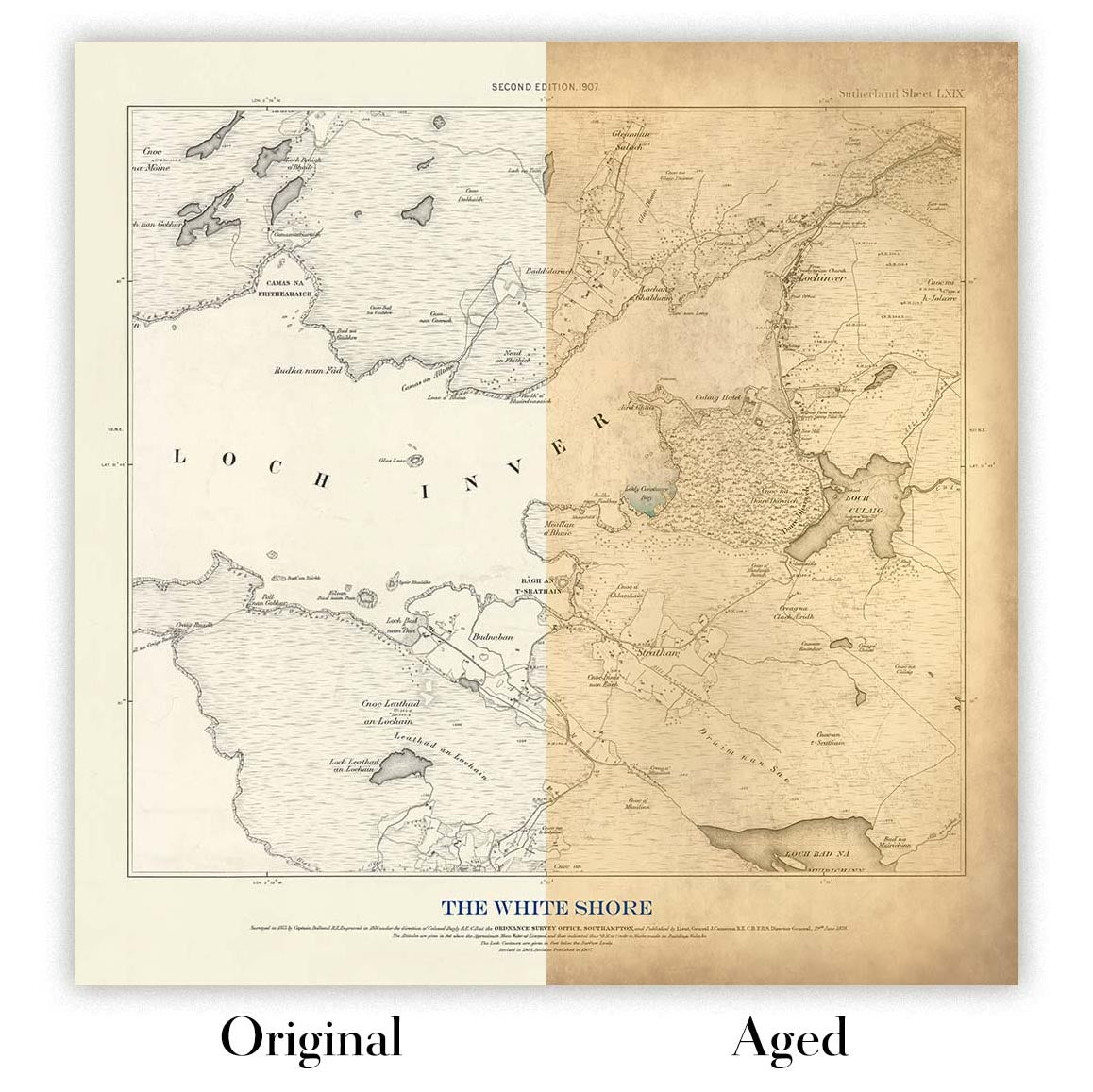
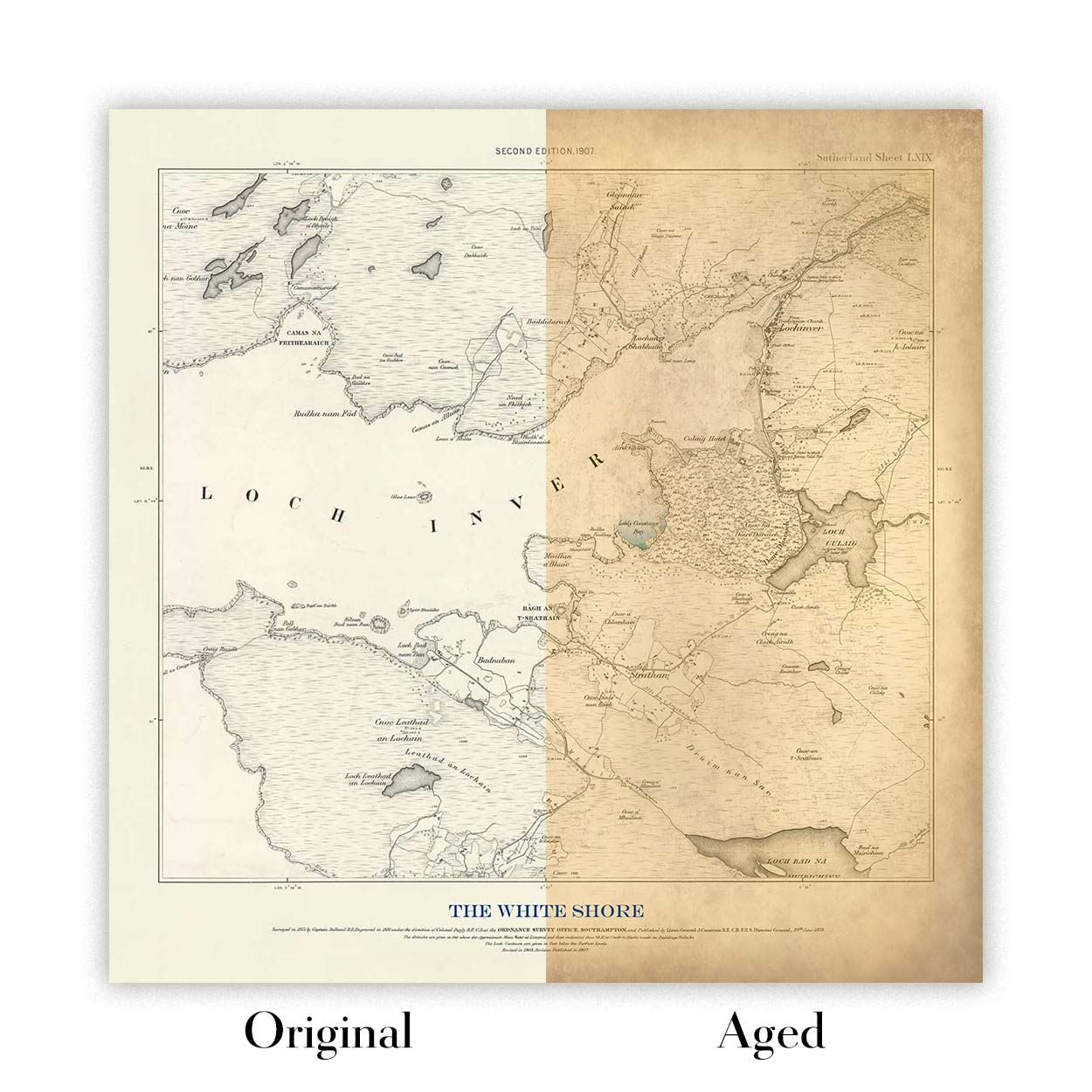
Original or Aged
Choose Original for true-to-source colour, or Aged for a warmer, richer antique character created with our specialist ageing process. See examples of our Aged maps.
We’ve been restoring and producing maps and art prints since 1984, and we stand behind every piece.
Every order is covered by our 10-year guarantee and damage-free delivery guarantee. If your piece arrives damaged, we’ll replace or remake it free of charge. If anything else isn’t right, contact our workshop team and we’ll put it right promptly.
See our returns and refund policy for full details.
Or try searching for something!


