












Yellow Amaryllis (Amaryllis lutea) by Pierre Joseph Redouté, 1806
Authentic artwork
The artwork we print is faithfully restored from the original source - usually a museum, auction house or private collection.
We never replace, redraw or invent the artist’s work using generative AI.
Christmas delivery & gifting

Send it straight to them
Add a gift message in your bag, then enter the recipient’s delivery address at checkout. We’ll print your message on a card. No prices are included in the parcel.
Delivery timing
Standard delivery is free worldwide and usually takes around 3 working days. Sending a gift abroad? We make most orders locally, in the recipient’s country.
Allow extra time for design and proof approval on personalised orders. See delivery details.
Returns: Standard orders can be returned or exchanged within 90 days of delivery. Personalised and custom-made pieces are generally excluded from change-of-mind returns. See our returns policy.
Black Friday Sale
Choose one item and get 20% off.
Choose two works and receive 30% off both. You can mix and match both maps and art.
No code is required. The offer is applied automatically.
Full terms and conditions
The Collector’s Offer applies to eligible works in standard made-to-order configurations. Bespoke sizes, personalised designs and commissioned work are excluded. Products with “personalised” or “custom” in their name are generally excluded.
The offer is administered as two separate automatic discounts: one for smaller formats and one for larger formats. To qualify, you must purchase two eligible works within the same format group. Maps and art prints may be mixed and matched within each group.
For example, two eligible A4 or 8 × 10 in prints qualify for 30% off both. One smaller-format print and one larger-format work do not qualify together, as items from different format groups cannot be combined to meet the two-item requirement.
No discount code is required. Any qualifying discount is applied automatically in your basket and at checkout.
Christmas schedule filling up. Order early.
Christmas orders & our workshop schedule
Our Christmas schedule is filling up, particularly for personalised maps and bespoke pieces. Ordering early allows time to prepare your artwork, complete any design approvals, and arrange printing and framing.
If your order requires a design preview, we’ll ask for your approval before printing. A prompt reply helps us keep your order moving through the workshop.
For standard maps and art prints, check the delivery estimate shown on the page. Larger framed orders travel more slowly through the logistics networks. Personalised and bespoke orders need time for design and approval.
Planning something more involved, or working to a particular deadline? Contact the workshop before ordering and we’ll help you check what’s possible.
Choose your size
Choose your finish


(More info)
Gift message & custom finish

If you want to add a gift message, or a finish (jigsaw, aluminium board, etc.) that is not available here, please request it in the "order note" when you check out.
Every order is custom made, so if you need the size adjusted slightly, or printed on an unusual material, just let us know. We've done thousands of custom orders over the years, so there's (almost) nothing we can't manage.
You can also contact us before you order, if you prefer!
- Made in Canada for fast, safe delivery
- Arrives perfect - or we replace it
-
Christmas delivery & gifting Christmas delivery & gifting
![View a full-size example of the printed gift message card]()
Send it straight to them
Add a gift message in your bag, then enter the recipient’s delivery address at checkout. We’ll print your message on a card. No prices are included in the parcel.
Delivery timing
Standard delivery is free worldwide and usually takes around 3 working days. Sending a gift abroad? We make most orders locally, in the recipient’s country.
Allow extra time for design and proof approval on personalised orders. See delivery details.
Returns: Standard orders can be returned or exchanged within 90 days of delivery. Personalised and custom-made pieces are generally excluded from change-of-mind returns. See our returns policy.
- Need help ordering?
In our customers’ words
More than 8,000 five-star reviews from around the world


Pierre Joseph Redouté’s Amaryllis lutea, dated 1806, presents the yellow-flowering plant as a complete botanical specimen rather than a detached bouquet. Brilliant...
Continue readingPierre Joseph Redouté’s Amaryllis lutea, dated 1806, presents the yellow-flowering plant as a complete botanical specimen rather than a detached bouquet. Brilliant blooms rise above a fan of long green leaves, while the exposed bulb and delicate roots anchor the composition below. Set against a pale, spacious ground, the plant appears at once scientifically legible and elegantly poised, its strong vertical growth softened by arching foliage and finely graduated colour.
Redouté was among the most accomplished flower painters of the late eighteenth and early nineteenth centuries, celebrated for reconciling botanical precision with unusual grace. His career belonged to a period in which natural-history illustration played an essential role in the observation, study and classification of plants. Yet his botanical plates were never merely diagrams: careful line, restrained composition and luminous colour gave individual specimens the presence of formal portraits.
A closer look
The eye is drawn first to the cluster of yellow flowers at the top of the plate. Their petals shift from rich golden tones towards paler cream at the edges, with gentle shadows beneath the blooms lending them volume. Slender green stems hold the flowers above the denser foliage, allowing each element to remain distinct. A faint subsidiary outline near the upper left provides a quieter botanical detail beside the fully coloured blossoms.
Below, the leaves create the composition’s principal rhythm. Some rise almost vertically, while others bend outwards in supple arcs, their overlapping forms giving depth to an otherwise uncluttered arrangement. Fine veins run along the blades, and subtle changes from fresh green to deeper shadow prevent the foliage from becoming a single flat mass. The contrast between these cool greens and the warm yellow flowers is especially clear against the softly beige ground.
The exposed bulb is an easily overlooked but important feature. Smoothly modelled and touched with a slight sheen, it forms a rounded counterweight to the open flowers above. Thin roots radiate from its base with remarkable delicacy, completing the plant’s structure from bloom to underground growth. At the lower centre, the labels “Amaryllis Lutea” and “Amaryllis Jaune” identify the specimen in Latin and French, preserving the plate’s dual character as both an object of study and a refined work of botanical art.
Context and significance
Redouté’s reputation rests in large part on this balance between exact observation and decorative clarity. Rather than surrounding the plant with habitat, props or ornamental borders, he isolates it in generous negative space. That decision makes comparison and inspection easier, but it also heightens the expressive qualities of the specimen: the upright stems, spreading leaves and exposed roots become a carefully organised sequence of lines and forms.
Amaryllis lutea is particularly compelling because nothing extraneous interrupts that structure. The vivid crown of flowers, the layered foliage and the quietly intricate root system reward different kinds of attention, moving from immediate colour to close botanical scrutiny. It is a characteristic example of how Redouté transformed natural-history illustration into an art of disciplined elegance.
Choosing the right size and finish
Artwork can feel intimate at smaller sizes and dramatically more architectural at larger ones. Use the room preview, model image and size guide to see how the proportions and scale will work in your space.
If you need an exact size, specialist framing or help planning a larger display, ask our workshop for advice.
The model in the listing images is holding the 24x36in (60x90cm) version of this art print.
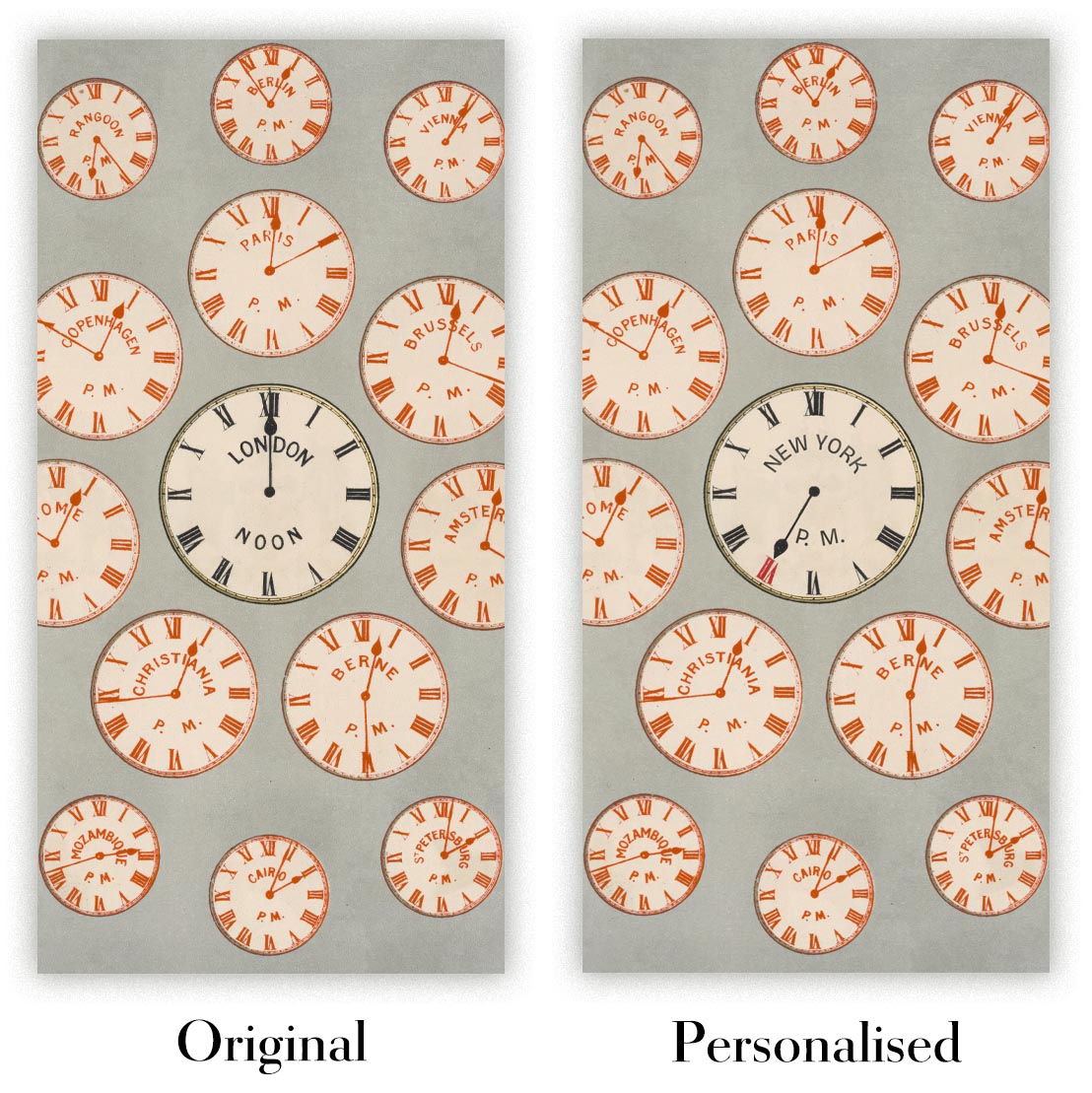
Where personalisation is available, you can add a short title or dedication, or one considered visual detail. See examples of personalised artwork.
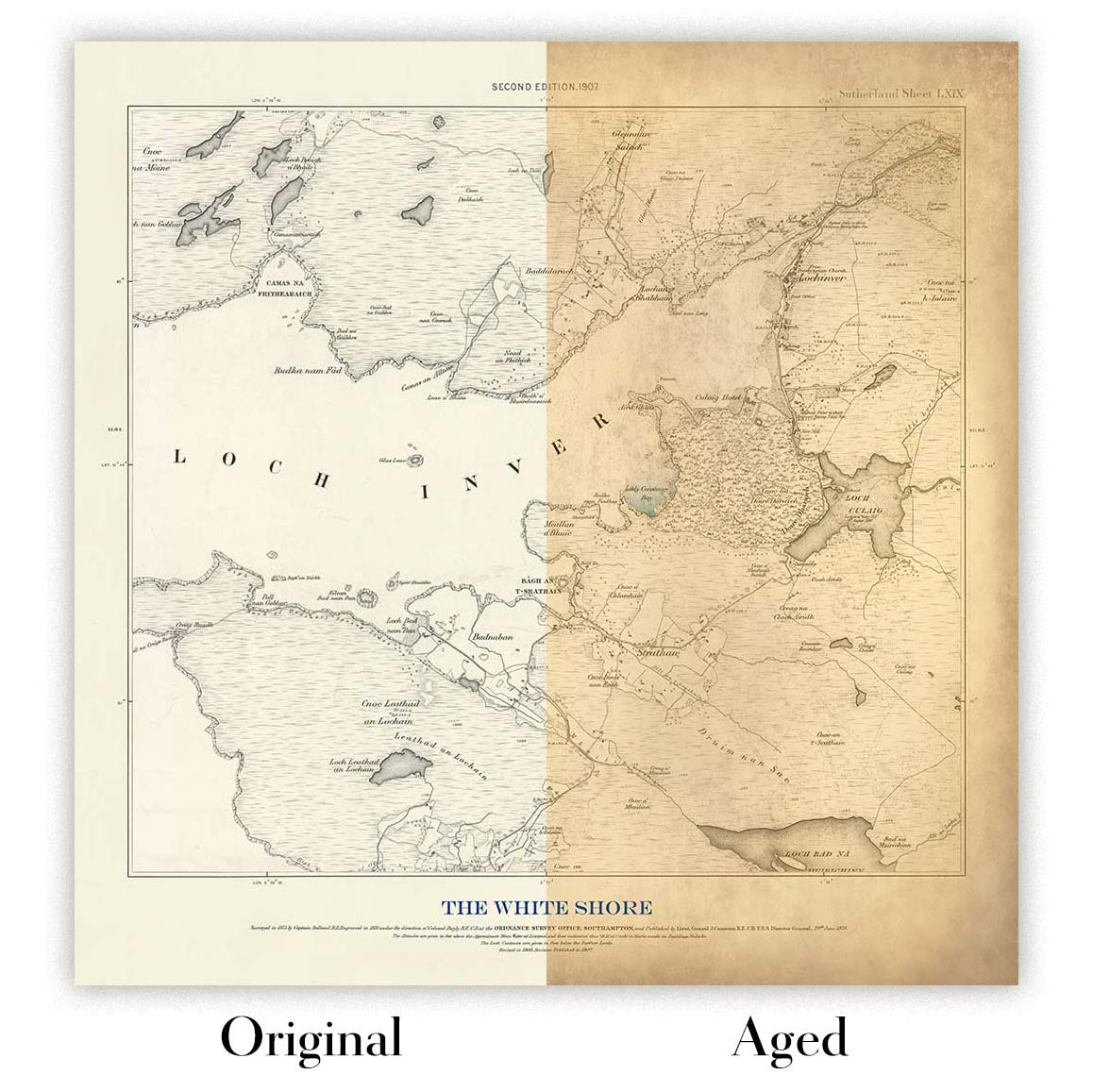
Choose Original to retain the colour and character of the source artwork, or Aged for a warmer, more antique appearance. See examples of our Aged artwork.
Every piece is produced to archival standards using fade-resistant pigment inks on acid-free matte art paper. Choose an art print, framed art print or framed canvas using the finish options above.
Framed art prints use crystal-clear optical acrylic for excellent clarity, lower weight and safer delivery than glass. Each piece arrives professionally framed and ready to hang.
Selected artworks can be produced at statement sizes up to 3 metres (10ft). Custom sizing and specialist framing are also available. If the exact option you need is not listed, contact our workshop.
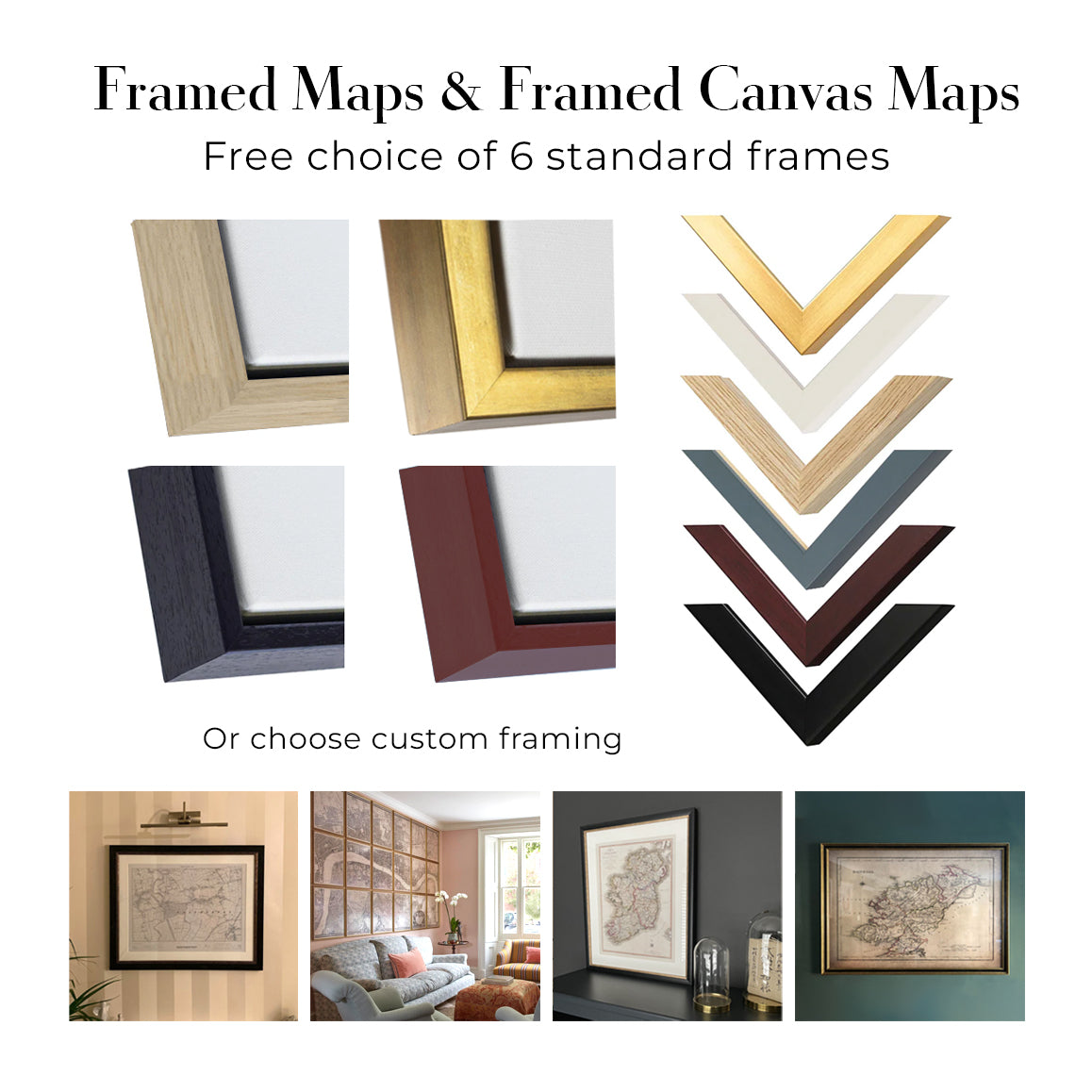
This artwork is also available as a float framed canvas, sometimes known as a shadow gap framed canvas or canvas floater. The work is printed on artist's cotton canvas and then stretched over a handmade box frame. We then "float" the canvas inside a wooden frame, which is available in a range of colours (black, dark brown, oak, antique gold and white). This is a wonderful way to present an art print without glazing in front. See some examples of float framed canvas art and explore the differences between my different finishes.
Pierre Joseph Redouté’s Amaryllis lutea, dated 1806, presents the yellow-flowering plant as a complete botanical specimen rather than a detached bouquet. Brilliant blooms rise above a fan of long green leaves, while the exposed bulb and delicate roots anchor the composition below. Set against a pale, spacious ground, the plant appears at once scientifically legible and elegantly poised, its strong vertical growth softened by arching foliage and finely graduated colour.
Redouté was among the most accomplished flower painters of the late eighteenth and early nineteenth centuries, celebrated for reconciling botanical precision with unusual grace. His career belonged to a period in which natural-history illustration played an essential role in the observation, study and classification of plants. Yet his botanical plates were never merely diagrams: careful line, restrained composition and luminous colour gave individual specimens the presence of formal portraits.
A closer look
The eye is drawn first to the cluster of yellow flowers at the top of the plate. Their petals shift from rich golden tones towards paler cream at the edges, with gentle shadows beneath the blooms lending them volume. Slender green stems hold the flowers above the denser foliage, allowing each element to remain distinct. A faint subsidiary outline near the upper left provides a quieter botanical detail beside the fully coloured blossoms.
Below, the leaves create the composition’s principal rhythm. Some rise almost vertically, while others bend outwards in supple arcs, their overlapping forms giving depth to an otherwise uncluttered arrangement. Fine veins run along the blades, and subtle changes from fresh green to deeper shadow prevent the foliage from becoming a single flat mass. The contrast between these cool greens and the warm yellow flowers is especially clear against the softly beige ground.
The exposed bulb is an easily overlooked but important feature. Smoothly modelled and touched with a slight sheen, it forms a rounded counterweight to the open flowers above. Thin roots radiate from its base with remarkable delicacy, completing the plant’s structure from bloom to underground growth. At the lower centre, the labels “Amaryllis Lutea” and “Amaryllis Jaune” identify the specimen in Latin and French, preserving the plate’s dual character as both an object of study and a refined work of botanical art.
Context and significance
Redouté’s reputation rests in large part on this balance between exact observation and decorative clarity. Rather than surrounding the plant with habitat, props or ornamental borders, he isolates it in generous negative space. That decision makes comparison and inspection easier, but it also heightens the expressive qualities of the specimen: the upright stems, spreading leaves and exposed roots become a carefully organised sequence of lines and forms.
Amaryllis lutea is particularly compelling because nothing extraneous interrupts that structure. The vivid crown of flowers, the layered foliage and the quietly intricate root system reward different kinds of attention, moving from immediate colour to close botanical scrutiny. It is a characteristic example of how Redouté transformed natural-history illustration into an art of disciplined elegance.
Choosing the right size and finish
Artwork can feel intimate at smaller sizes and dramatically more architectural at larger ones. Use the room preview, model image and size guide to see how the proportions and scale will work in your space.
If you need an exact size, specialist framing or help planning a larger display, ask our workshop for advice.
The model in the listing images is holding the 24x36in (60x90cm) version of this art print.
Where personalisation is available, you can add a short title or dedication, or one considered visual detail. See examples of personalised artwork.
Choose Original to retain the colour and character of the source artwork, or Aged for a warmer, more antique appearance. See examples of our Aged artwork.
Every piece is produced to archival standards using fade-resistant pigment inks on acid-free matte art paper. Choose an art print, framed art print or framed canvas using the finish options above.
Framed art prints use crystal-clear optical acrylic for excellent clarity, lower weight and safer delivery than glass. Each piece arrives professionally framed and ready to hang.
Selected artworks can be produced at statement sizes up to 3 metres (10ft). Custom sizing and specialist framing are also available. If the exact option you need is not listed, contact our workshop.
This artwork is also available as a float framed canvas, sometimes known as a shadow gap framed canvas or canvas floater. The work is printed on artist's cotton canvas and then stretched over a handmade box frame. We then "float" the canvas inside a wooden frame, which is available in a range of colours (black, dark brown, oak, antique gold and white). This is a wonderful way to present an art print without glazing in front. See some examples of float framed canvas art and explore the differences between my different finishes.
Many of our maps and art prints are chosen as thoughtful gifts for homes, offices, studies and meaningful places.
Choose a framed option for the easiest ready-to-hang gift, or choose an unframed print if the recipient may prefer to select their own frame.
We make orders locally in 24 countries around the world, so gifts can often be produced close to the recipient. This helps them arrive faster, travel more safely, and avoid customs or import duty surprises.
- We can deliver directly to the recipient. No price info is included.
- A gift message can be added to your order. We'll print it on a nice card.
- Framed pieces arrive ready to hang
- Unframed prints are carefully packed in a strong protective tube
- Almost every order is made locally, for faster, safer gifting
- 90-day returns give the recipient time to decide
If you are not sure what to choose, please contact us. We can help you pick the right map, size, finish or delivery option.
Most orders are made locally and delivered in around 2–3 working days, depending on the product, size and destination.
We print and frame maps and artwork in 24 countries around the world, so your order is usually made close to you or your recipient. That means faster delivery, less time in transit, and no customs or import duty surprises.
Personalised and customised pieces usually take an extra 1–2 working days, because we prepare your design and send it to you for approval before printing.
Very large framed orders can take a little longer, as they need extra care in production and delivery.
Every order is carefully packaged: unframed prints are sent in a strong protective tube, while framed pieces are securely packed with protective materials around the frame.
If you need your order by a particular date, please contact us before ordering. We’ll check the best production route and delivery option for your location.
Express delivery is available at checkout for most countries. Next-day delivery is available in the UK, US, Singapore and the UAE.
Your order is covered by our 90-day returns policy and 10-year guarantee.
Our standard frame is a gallery-style black ash hardwood frame, with a simple, modern look. It is approximately 20mm (0.8in) wide. You can also view some lovely customer photos of framed maps and art.
We use super-clear acrylic glazing, also known as Perspex or Acrylite, instead of traditional glass. It is lighter, safer, and has lower reflectivity, giving the artwork a clearer, cleaner appearance.
Six standard frame colours are available at no extra cost: black, dark brown, dark grey, oak, white, and antique gold. Custom framing and mounting/matting is also available for customers looking for something more specific.
Most maps, art prints, and illustrations are also available as a framed canvas. We use matte cotton canvas, stretch it over a sustainably sourced wooden box frame, and then float the piece within a wooden outer frame. The finished result is beautifully presented, with no glazing between you and the artwork.
All frames are supplied ready to hang, with either string or brackets fitted to the back. Very large frames will include heavy-duty hanging plates and/or a mounting baton. If you have any questions, please get in touch.
We can also supply old maps and artwork on canvas, foam board, cotton rag, and other materials.
If you would prefer to frame your map or artwork yourself, please read our size guide before ordering.
We work with interior designers, hospitality businesses, property professionals, offices and corporate buyers on individual pieces and larger coordinated projects.
This artwork can be adapted for a particular wall, room or project, and our workshop can help coordinate the dimensions, material and framing before production.
- Exact, oversized and made-to-measure dimensions
- Custom framing, mounting and alternative materials
- Coordinated pieces for several rooms or locations
- Art personalisation, to adjust the colour and style of the piece
- Art and framing guidance from our workshop
- Local production for projects around the world
Every restored art print begins with the original artist’s work—never an AI-generated replacement.
Our London studio works from carefully selected source material from museums, libraries, archives and private collections. We restore age-related damage, faded colour and imperfect reproduction while preserving the artist’s composition, brushwork, line, texture and period character.
We do not use generative AI to redraw, reinterpret or invent the artwork. Digital restoration is used only to recover and reproduce the original work as faithfully as possible.
Once restored, the master artwork is prepared for your chosen size and finish. Your piece is then printed and, where selected, framed close to its delivery destination.
Our giclée art prints use acid-free 200gsm archival matte paper and fade-resistant pigment inks for a rich, museum-quality finish. Framed art prints use crystal-clear optical acrylic and arrive ready to hang.
Framed canvas and specialist cotton-rag editions are also available. Learn more about our materials and finishes.
We’ve been restoring and producing maps and art prints since 1984, and we stand behind every piece.
Every order is covered by our 10-year guarantee and damage-free delivery guarantee. If your piece arrives damaged, we’ll replace or remake it free of charge. If anything else isn’t right, contact our workshop team and we’ll put it right promptly.
See our returns and refund policy for full details.


